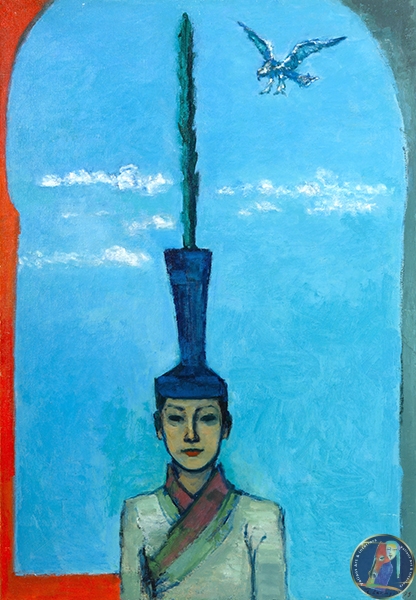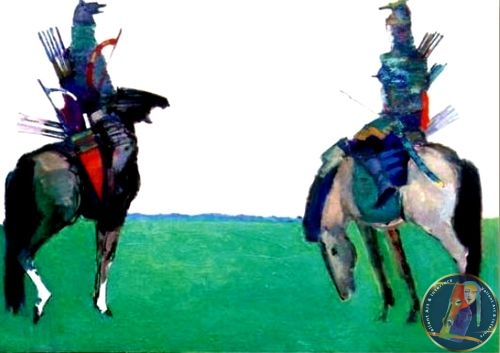

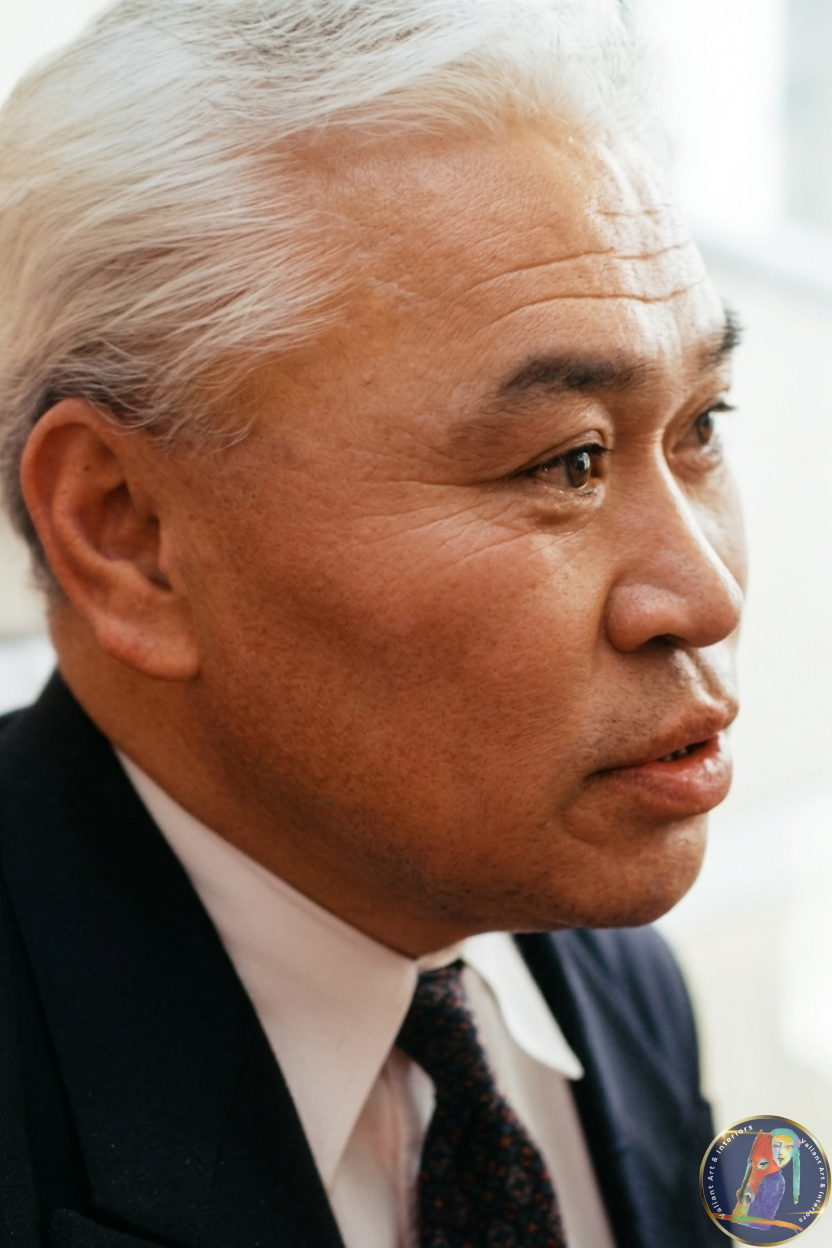
Enkhjin Tsultem (b. 1953, Ulaanbaatar, Mongolia) is a distinguished Mongolian artist whose work spans abstract, modern, contemporary, and figurative styles. Recognized for his dynamic visual language and cultural depth, Tsultem has played a pivotal role in shaping Mongolia’s modern art scene while maintaining a strong international presence.
He received his formal training in Germany, studying at the Fachschule für Angewandte Kunst in Berlin (1972–1973) and later at the Hochschule für Bildende Künste in Dresden (1973–1978). This European academic foundation significantly influenced his artistic development, blending Western techniques with Mongolian themes and sensibilities.
Tsultem’s career is marked by both artistic achievement and cultural leadership. He served multiple terms as Art Director of the Art Gallery of the Union of Mongolian Artists (UMA) between 1979–1981 and 1987–1990, later becoming Coordinator for International Relations (1990–1992). His leadership within the UMA culminated in his roles as Vice-Chairman in 1992 and Chairman from 1995 to 2001. During this period, he contributed significantly to the promotion of Mongolian art on a global stage. In 2000–2001, he also served as a board member for the Ministry of Culture, Education and Science, further strengthening his influence in the cultural sector.
Since 1980, Tsultem has exhibited extensively both in Mongolia and internationally, with shows across Europe, Asia, and North America, including Austria, France, Germany, Japan, China, the United States, and the United Kingdom. His exhibitions include numerous solo and group shows, as well as participation in major international events such as the Tokyo International Art Show (1993), the First Beijing International Art Biennale (2003), and Art Expo fairs in New York, Miami, Las Vegas, and beyond. His work has also been featured in prominent cultural exchanges and exhibitions highlighting Mongolian art worldwide.
Through decades of artistic production and institutional leadership, Enkhjin Tsultem has established himself as a central figure in contemporary Mongolian art, bridging local traditions with global artistic discourse.