A Woman With Ancient Clothes

Enkhjin Tsultem , 1999 , Oil On Canvas

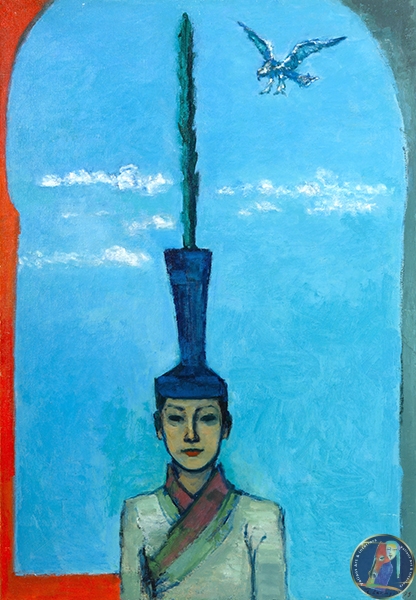
In this 1999 masterpiece, Enkhjin Tsultem bridges the gap between Mongolian heritage and European academic training. A Woman With Ancient Clothes is a striking example of Tsultem’s ability to merge figurative precision with an abstracted, contemporary atmosphere. Standing over four feet tall, the canvas commands attention through its scale and the regal, almost ethereal presence of its subject.

Visual Description

  • The Subject: The painting features a lone female figure positioned centrally, draped in traditional Mongolian attire. Her pose is dignified and static, evoking the stillness of a historic photograph or a statue. Despite the “ancient” label of her clothes, she feels immediate and alive, a testament to Tsultem’s mastery of the figurative form.

  • Color Palette and Texture: Tsultem utilizes a sophisticated palette that balances earthy, grounded tones with flashes of symbolic color. The “ancient clothes” are rendered with rich, textural brushwork, suggesting the weight of heavy silks and intricate embroidery. The background leans into his Abstract Modern style, using layered oil pigments to create a misty, timeless space that isolates the woman from a specific era.

  • Composition: At 129 x 90 cm, the verticality of the canvas emphasizes the subject’s stature. There is a palpable tension between the sharp details of the woman’s features—likely influenced by the artist’s education at the Hochschule für Bildende Künste in Dresden—and the fluid, expressive strokes that define the periphery of the work.

Artistic Context

The painting serves as a bridge between the artist’s rigorous German education and his deep roots in Ulaanbaatar. Having served as the Chairman of the Union of Mongolian Artists, Tsultem used works like this to define a post-Soviet Mongolian identity.

The piece does not merely document historical fashion; it explores the concept of “ancestry” as a living, breathing component of the modern Mongolian soul. The woman acts as a guardian of culture, her “ancient” garments serving as an armor of identity in a rapidly changing contemporary world.

Cultural Significance

Created during Tsultem’s tenure as Chairman of the UMA, this painting reflects a period of significant cultural leadership. It embodies the contemporary Mongolian aesthetic: a sophisticated blend of Western oil techniques and Eastern nomadic iconography. It is a quiet yet powerful statement on the endurance of Mongolian tradition through the lens of 20th-century modernism.
  • Enkhjin Tsultem
  • Figurative, Mongolian Style, Photorealism
  • Oil On Canvas
  • ENK22/001
  • 129 x 90cm
  • Mongolian Art Gallery

Add Your Comment

Mongolian Art Gallery © 2025. All Rights Reserved
Privacy Policy / Terms of Use

In this 1999 masterpiece, Enkhjin Tsultem bridges the gap between Mongolian heritage and European academic training. A Woman With Ancient Clothes is a striking example of Tsultem’s ability to merge figurative precision with an abstracted, contemporary atmosphere. Standing over four feet tall, the canvas commands attention through its scale and the regal, almost ethereal presence of its subject.

Visual Description

  • The Subject: The painting features a lone female figure positioned centrally, draped in traditional Mongolian attire. Her pose is dignified and static, evoking the stillness of a historic photograph or a statue. Despite the “ancient” label of her clothes, she feels immediate and alive, a testament to Tsultem’s mastery of the figurative form.

  • Color Palette and Texture: Tsultem utilizes a sophisticated palette that balances earthy, grounded tones with flashes of symbolic color. The “ancient clothes” are rendered with rich, textural brushwork, suggesting the weight of heavy silks and intricate embroidery. The background leans into his Abstract Modern style, using layered oil pigments to create a misty, timeless space that isolates the woman from a specific era.

  • Composition: At 129 x 90 cm, the verticality of the canvas emphasizes the subject’s stature. There is a palpable tension between the sharp details of the woman’s features—likely influenced by the artist’s education at the Hochschule für Bildende Künste in Dresden—and the fluid, expressive strokes that define the periphery of the work.

Artistic Context

The painting serves as a bridge between the artist’s rigorous German education and his deep roots in Ulaanbaatar. Having served as the Chairman of the Union of Mongolian Artists, Tsultem used works like this to define a post-Soviet Mongolian identity.

The piece does not merely document historical fashion; it explores the concept of “ancestry” as a living, breathing component of the modern Mongolian soul. The woman acts as a guardian of culture, her “ancient” garments serving as an armor of identity in a rapidly changing contemporary world.

Cultural Significance

Created during Tsultem’s tenure as Chairman of the UMA, this painting reflects a period of significant cultural leadership. It embodies the contemporary Mongolian aesthetic: a sophisticated blend of Western oil techniques and Eastern nomadic iconography. It is a quiet yet powerful statement on the endurance of Mongolian tradition through the lens of 20th-century modernism.