
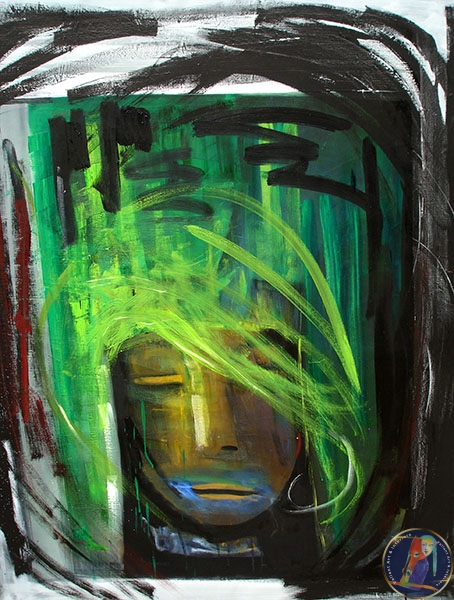
Zaluugiin Hurug is a striking example of contemporary Mongolian figurative art, blending traditional portraiture sensibilities with a modern, expressive flair. The title, which translates to “Portrait of a Youth,” sets the stage for a work that captures the transition between the heritage of the Mongolian steppe and the burgeoning urban identity of the early 21st century.
The Subject: The painting features a young figure rendered with a balance of realism and abstraction. The artist, Odgerel Tsulbaatar, uses bold, confident brushstrokes to define the facial features, emphasizing a gaze that feels both introspective and resilient. The subject’s posture is steady, commanding the 110 x 90 cm space with a sense of quiet dignity.
Color Palette and Texture: The use of oil allows for a rich, layered texture. The palette often leans into earthy tones—ochres, deep reds, and siennas—which may be contrasted by sharp, modern accents of cerulean or stark white. This juxtaposition reflects Tsulbaatar’s “Modern / Contemporary” style, where the physical weight of the paint adds a tactile, emotional depth to the canvas.
Composition: The scale of the work is significant; at nearly a meter wide, the portrait feels intimate yet monumental. The background likely utilizes the “Abstract” tendencies of the artist, eschewing a literal setting in favor of a wash of colors and shapes that suggest movement, wind, or the vast Mongolian landscape without explicitly depicting it. This keeps the viewer’s focus squarely on the “Figurative” element—the youth.
Artistic Context
Created just two years after Tsulbaatar graduated from the Fine Art University in Ulaanbaatar, Zaluugiin Hurug represents a pivotal moment in his early career. Having participated in high-profile exhibitions like “Great Mongol 800” and “Seeking the Real Feel I,” Tsulbaatar’s work in 2007 showcases a mastery of technique combined with a desire to redefine Mongolian identity through a contemporary lens.
The painting serves as a bridge between the artist’s classical training and his exploration of “New Art,” capturing the spirit of a generation born into a rapidly changing, post-socialist Mongolia.