
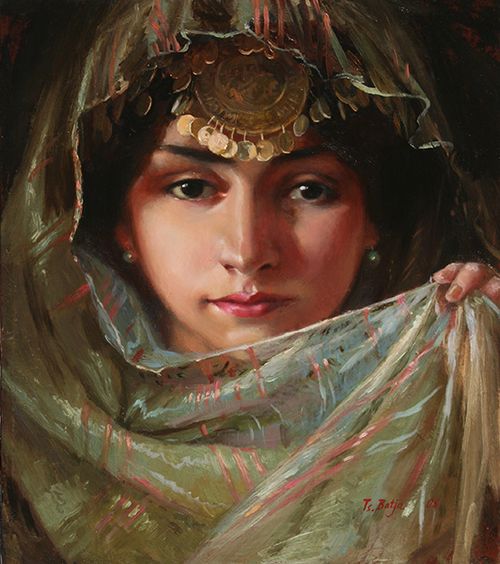
Batjargal Tseintsogzol (1966–2020) was a master of Mongolian contemporary realism, known for his ability to weave the profound stillness of the steppe into the meticulous detail of photorealism. His 2008 work, “Woman,” is a quintessential example of his dedication to capturing the quiet dignity of his subjects through a lens of sharp, yet soulful, clarity.
Visual Composition & Style
At 40 x 50cm, the painting is intimate, drawing the viewer into a close, personal encounter with the subject. Tseintsogzol utilizes a photorealistic approach, where every brushstroke is invisible, giving way to the textures of reality.
The Subject: The woman is likely depicted in a moment of repose or contemplation. Tseintsogzol often focused on the subtle expressions of Mongolian women—balancing strength with a soft, internal grace.
Texture and Detail: Given his mastery of oil, expect a high level of fidelity in the rendering of fabrics (perhaps a traditional deel or modern attire), the translucent quality of skin, and the specific play of light on the hair.
Lighting: His work often features soft, directional light that mimics the natural atmosphere of Ulaanbaatar or the rural countryside, creating deep, soft shadows that give the figure a three-dimensional, “living” presence.
The Intersection of Realism & Nature
Although titled “Woman,” Tseintsogzol’s association with Nature often permeates his portraits. In his philosophy, the human figure is not separate from the environment.
Color Palette: You will likely see a grounded, earthy palette—ochres, deep russets, and cool blues—reflecting the natural landscape of Mongolia.
Atmosphere: There is a “breathable” quality to the air in his paintings. The background is often minimalist or softly blurred (bokeh effect), ensuring the viewer’s focus remains entirely on the emotional weight of the woman’s gaze or posture.
Artistic Legacy
As a prominent figure in the Mongolian art scene until his passing in 2020, Tseintsogzol’s work in the early 2000s marked a peak in the “New Realism” movement in Mongolia. “Woman” serves as a bridge between traditional Mongolian identity and a modern, international aesthetic of high-definition realism.