Winter

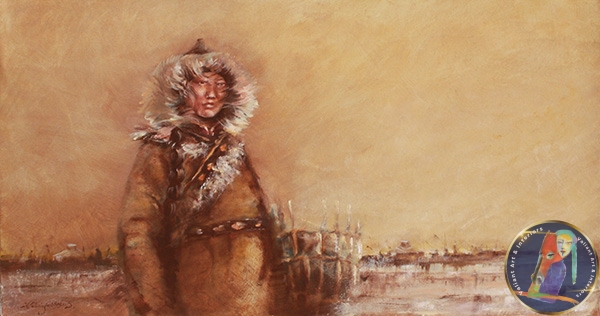
Ulziijavkhlan Adyabaatar , 2009 , Oil On Canvas

The painting is a horizontal landscape ($50 \times 90\text{ cm}$) that captures the vast, serene, and harsh reality of a Mongolian winter. The composition is built on a low horizon line, dedicating the upper two-thirds of the canvas to a massive, atmospheric sky, which emphasizes the immense scale and isolation of the rural landscape.

In the lower third of the canvas, a snow-covered steppe stretches out toward distant, rolling hills. The central focus of the piece is a small, traditional Mongolian settlement. A solitary ger (a traditional felt yurt) stands against the elements, its circular form partially buried by drifting snow. Near the ger, a small herd of horses or livestock is depicted huddled together for warmth, their figures rendered with loose, impressionistic brushstrokes that suggest movement against the biting cold. A faint trail of footsteps or sled tracks cuts through the foreground snow, leading the viewer’s eye toward the dwelling and adding a subtle human element to the vast wilderness.

Color Palette and Light

The color palette is minimalist, cool-toned, and dominated by atmospheric neutrals. Adyabaatar uses a sophisticated range of whites, muted grays, icy blues, and soft lavenders to represent the snow-packed ground and the heavy, overcast winter sky.

The light in the painting is diffused and soft, characteristic of a thick winter overcast where the sun is completely obscured. There are no harsh shadows; instead, subtle gradients of blue and violet tones define the contours of the snowdrifts and the distant hills. The only warm tones in the entire composition are tiny, deliberate accents—perhaps the weathered fabric of the ger door or the dark coats of the huddled animals—which provide a stark visual contrast to the dominant icy tones.

Texture and Brushwork

Executed in oil on canvas, the painting features a rich, textured surface that mirrors the physical elements of winter.

  • The Sky: The sky is rendered with broad, sweeping, and blended brushstrokes, creating a heavy, seamless blanket of clouds that feels laden with upcoming snowfall.

  • The Foreground: In contrast, the snow on the ground is applied with more visible, impasto brushwork (thickly applied paint). The artist uses a palette knife and visible bristles to create physical texture on the canvas, perfectly capturing the crusty, wind-swept surface of frozen snow and the rugged terrain beneath it.

Mood and Atmosphere

The overall mood of Winter is one of profound stillness, resilience, and quiet isolation. Through the expansive sky and the tiny scale of the ger, Adyabaatar conveys the sublime and intimidating power of Mongolian nature, while simultaneously highlighting the quiet endurance of pastoral life thriving in one of the most extreme climates on Earth.
  • Ulziijavkhlan Adyabaatar
  • Dund Gobi, Mongolia
  • Figurative, Landscape, Nature, Portrait, Realism
  • Oil on canvas
  • ULZ83/006
  • 50 x 90cm19" x 35"
  • Valiant Art & Interiors

Add Your Comment

Mongolian Art Gallery © 2025. All Rights Reserved
Privacy Policy / Terms of Use

The painting is a horizontal landscape ($50 \times 90\text{ cm}$) that captures the vast, serene, and harsh reality of a Mongolian winter. The composition is built on a low horizon line, dedicating the upper two-thirds of the canvas to a massive, atmospheric sky, which emphasizes the immense scale and isolation of the rural landscape.

In the lower third of the canvas, a snow-covered steppe stretches out toward distant, rolling hills. The central focus of the piece is a small, traditional Mongolian settlement. A solitary ger (a traditional felt yurt) stands against the elements, its circular form partially buried by drifting snow. Near the ger, a small herd of horses or livestock is depicted huddled together for warmth, their figures rendered with loose, impressionistic brushstrokes that suggest movement against the biting cold. A faint trail of footsteps or sled tracks cuts through the foreground snow, leading the viewer’s eye toward the dwelling and adding a subtle human element to the vast wilderness.

Color Palette and Light

The color palette is minimalist, cool-toned, and dominated by atmospheric neutrals. Adyabaatar uses a sophisticated range of whites, muted grays, icy blues, and soft lavenders to represent the snow-packed ground and the heavy, overcast winter sky.

The light in the painting is diffused and soft, characteristic of a thick winter overcast where the sun is completely obscured. There are no harsh shadows; instead, subtle gradients of blue and violet tones define the contours of the snowdrifts and the distant hills. The only warm tones in the entire composition are tiny, deliberate accents—perhaps the weathered fabric of the ger door or the dark coats of the huddled animals—which provide a stark visual contrast to the dominant icy tones.

Texture and Brushwork

Executed in oil on canvas, the painting features a rich, textured surface that mirrors the physical elements of winter.

  • The Sky: The sky is rendered with broad, sweeping, and blended brushstrokes, creating a heavy, seamless blanket of clouds that feels laden with upcoming snowfall.

  • The Foreground: In contrast, the snow on the ground is applied with more visible, impasto brushwork (thickly applied paint). The artist uses a palette knife and visible bristles to create physical texture on the canvas, perfectly capturing the crusty, wind-swept surface of frozen snow and the rugged terrain beneath it.

Mood and Atmosphere

The overall mood of Winter is one of profound stillness, resilience, and quiet isolation. Through the expansive sky and the tiny scale of the ger, Adyabaatar conveys the sublime and intimidating power of Mongolian nature, while simultaneously highlighting the quiet endurance of pastoral life thriving in one of the most extreme climates on Earth.