
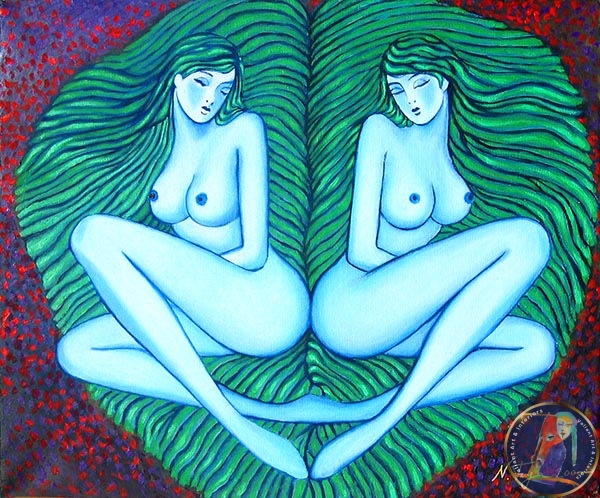
Spring

Tuya Natsagdorj , 2005 , Oil On Canvas

Here is a detailed text description of the painting “Spring” by Mongolian artist Tuya Natsagdorj, crafted to reflect the artist’s unique blending of traditional Mongolian roots, Ukrainian scenic training, and Japanese artistic influences.

Visual Composition and Subject Matter

“Spring” is a vibrant oil on canvas painting measuring 51 by 61 centimeters. The artwork captures a lyrical, stylized scene deeply rooted in the seasonal transitions of the Mongolian landscape. The composition balances a rich narrative quality with semi-abstract, poetic forms.

At the heart of the painting is a depiction of rebirth and movement. Rather than a purely literal representation, the artist utilizes flowing, organic lines that sweep across the canvas, mimicking the gentle melting of winter ice and the sudden, rhythmic awakening of the steppe. Elements of traditional Mongolian life—such as stylized figures, nomadic motifs, or hints of local wildlife—are woven seamlessly into the landscape, appearing almost like an apparition emerging from the cold season.

Color Palette and Light

The color palette is the driving force behind the painting’s title. Natsagdorj moves away from the stark, muted whites and deep blues of a Mongolian winter, injecting the canvas with a sudden burst of warmth and vitality.

  • Dominant Tones: Soft pastel greens, pale ochres, and earth tones represent the emerging ground, contrasted against patches of brilliant turquoise and cerulean blue that signify breaking ice and clear spring skies.

  • Accents: Sharp, deliberate strokes of coral, soft pink, or gold cut through the landscape, suggesting early desert blooms or the warm glow of the sun breaking over the horizon.

The light in the painting is non-directional and atmospheric. It feels diffused and luminous, capturing that specific, crisp quality of daylight found on the high-altitude plateaus of Mongolia during early spring.

Texture and Brushwork

Reflecting Natsagdorj’s diverse background—particularly her training in scene painting in Kyiv and her studies in Kyoto—the texture is both theatrical and meticulously balanced.

  • The oil paint is applied with varied density; some areas feature thin, translucent glazes that allow underlying layers to peek through, creating a sense of vast, open space and atmosphere.

  • In contrast, key focal points are defined by thicker, expressive impasto brushstrokes, giving a physical, tactile weight to the awakening earth.

The linework possesses a fluid, calligraphic elegance that hints at her time in Japan, guiding the viewer’s eye across the canvas in a continuous, harmonious loop.

Mood and Atmospheric Impact

The overall mood of “Spring” is one of quiet optimism, serenity, and rhythmic energy. It captures the profound emotional relief of a nomadic culture surviving a harsh winter and welcoming the season of milk, new life, and warmth. The painting functions not just as a visual landscape, but as an emotional one—a celebration of resilience, transition, and the timeless cycles of nature.

  • Tuya Natsagdorj
  • Ulaanbaatar, Mongolia
  • Abstract, Expressionist, Figurative, Modern/Contemporary, Still Life
  • Oil on canvas
  • TUY49/021
  • 51 x 61cm20" x 24"
  • Valiant Art & Interiors

Add Your Comment

Mongolian Art Gallery © 2025. All Rights Reserved
Privacy Policy / Terms of Use

Here is a detailed text description of the painting “Spring” by Mongolian artist Tuya Natsagdorj, crafted to reflect the artist’s unique blending of traditional Mongolian roots, Ukrainian scenic training, and Japanese artistic influences.

Visual Composition and Subject Matter

“Spring” is a vibrant oil on canvas painting measuring 51 by 61 centimeters. The artwork captures a lyrical, stylized scene deeply rooted in the seasonal transitions of the Mongolian landscape. The composition balances a rich narrative quality with semi-abstract, poetic forms.

At the heart of the painting is a depiction of rebirth and movement. Rather than a purely literal representation, the artist utilizes flowing, organic lines that sweep across the canvas, mimicking the gentle melting of winter ice and the sudden, rhythmic awakening of the steppe. Elements of traditional Mongolian life—such as stylized figures, nomadic motifs, or hints of local wildlife—are woven seamlessly into the landscape, appearing almost like an apparition emerging from the cold season.

Color Palette and Light

The color palette is the driving force behind the painting’s title. Natsagdorj moves away from the stark, muted whites and deep blues of a Mongolian winter, injecting the canvas with a sudden burst of warmth and vitality.

  • Dominant Tones: Soft pastel greens, pale ochres, and earth tones represent the emerging ground, contrasted against patches of brilliant turquoise and cerulean blue that signify breaking ice and clear spring skies.

  • Accents: Sharp, deliberate strokes of coral, soft pink, or gold cut through the landscape, suggesting early desert blooms or the warm glow of the sun breaking over the horizon.

The light in the painting is non-directional and atmospheric. It feels diffused and luminous, capturing that specific, crisp quality of daylight found on the high-altitude plateaus of Mongolia during early spring.

Texture and Brushwork

Reflecting Natsagdorj’s diverse background—particularly her training in scene painting in Kyiv and her studies in Kyoto—the texture is both theatrical and meticulously balanced.

  • The oil paint is applied with varied density; some areas feature thin, translucent glazes that allow underlying layers to peek through, creating a sense of vast, open space and atmosphere.

  • In contrast, key focal points are defined by thicker, expressive impasto brushstrokes, giving a physical, tactile weight to the awakening earth.

The linework possesses a fluid, calligraphic elegance that hints at her time in Japan, guiding the viewer’s eye across the canvas in a continuous, harmonious loop.

Mood and Atmospheric Impact

The overall mood of “Spring” is one of quiet optimism, serenity, and rhythmic energy. It captures the profound emotional relief of a nomadic culture surviving a harsh winter and welcoming the season of milk, new life, and warmth. The painting functions not just as a visual landscape, but as an emotional one—a celebration of resilience, transition, and the timeless cycles of nature.