

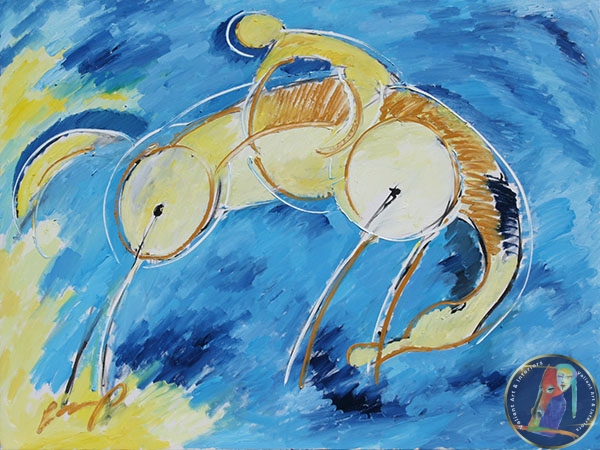
Small Composition 3 is a vibrant, modern exploration of Mongolian heritage through the lens of contemporary abstraction. While the title suggests a focus on formal arrangement, the work is deeply rooted in the rhythmic energy of the Central Asian steppe. Banzardari utilizes a rich, tactile application of oil paint to create a surface that feels as much like a woven textile as a traditional landscape.
Composition and Style
The painting is characterized by a “tapestry-like” structure. Rather than using a singular focal point, Banzardari distributes visual weight across the 60 x 80 cm canvas using a series of interlocking geometric shapes and fluid, calligraphic lines.
The Palette: The work features a sophisticated blend of earthy ochres, deep terracottas, and sudden shocks of cerulean blue and crimson. These colors evoke the natural minerals of the Mongolian landscape and the traditional dyed wools of nomadic crafts.
Symbolism: Hidden within the “composition” are abstracted motifs suggestive of equestrian culture—deconstructed silhouettes of horses, the sweeping curves of a saddle, or the rhythmic gait of a rider. These elements reflect the artist’s participation in the 2010 International Equestrian Festival, bridging the gap between specific cultural iconography and universal abstraction.
Texture: The artist employs varied brushwork, ranging from thin, translucent glazes to thick, impasto strokes. This creates a sense of depth and movement, suggesting the wind-swept motion of the plains or the layered history of Mongolian nomadic life.
Artistic Context
Born in Erdenet City, Banzardari belongs to a generation of Mongolian artists who successfully fuse traditional nomadic aesthetics with Western modernism. In Small Composition 3, he moves away from literal representation, choosing instead to capture the “spirit” or “vibration” of his subject matter. The medium of oil on canvas allows him a structural permanence that contrasts beautifully with the fleeting, energetic nature of the scene he depicts.
Note: This piece stands as a significant example of Banzardari’s ability to translate the vastness of the Mongolian environment into a compact, disciplined formal arrangement.