
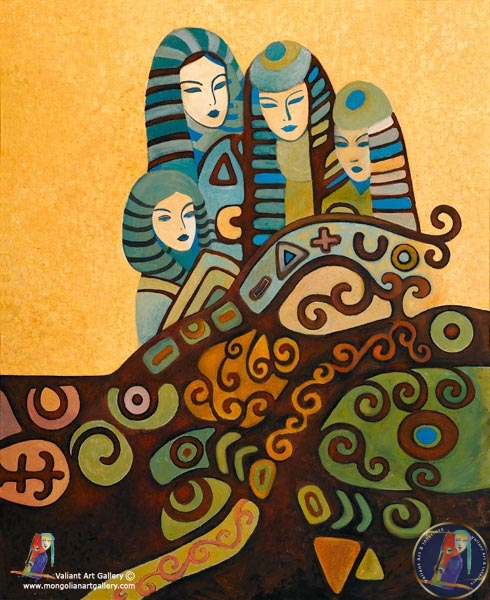
Sisters is a compelling figurative oil painting that masterfully bridges contemporary international modernism with traditional Mongolian ornamental symbolism. The composition centers on a quiet, intimate depiction of female companionship and kinship, capturing two central figures—the “sisters”—positioned closely together within a stylized space.
The figures are rendered with a distinct figurative elegance that reflects the artist’s diverse global training, fusing the structural sensibilities of European scene painting (honed during her time in Kyiv) with the clean, deliberate spatial composition characteristic of East Asian art (influenced by her studies in Kyoto). Rather than utilizing strict realism, Natsagdorj employs softly stylized forms and expressive contours to convey the deep emotional and psychological bond shared between the two subjects.
Color Palette and Texture
The painting is defined by a deeply evocative, atmospheric color palette. Rich, velvety blues, cool tones, and nuanced tonal shifts dominate the canvas, establishing a contemplative and poetic mood. These cool hues are thoughtfully balanced by subtle skin tones and symbolic blocks of color in the background or clothing, injecting the scene with an understated warmth.
Natsagdorj utilizes the oil medium to create a textured, layered surface. Visible brushstrokes and softly blended transitions give the skin and garments a tactile quality, while the treatment of light suggests a serene, interior setting. The interplay of light and shadow is gentle, highlighting the serene facial features of the sisters and emphasizing their quiet expressions of mutual trust and shared history.
Style and Symbolism
Stylistically, Sisters sits at the intersection of modern figurative painting and ornamental symbolism. The background is relatively abstract or minimally defined, pulling all focus onto the relationship between the two women. The positioning of the figures—overlapping or leaning toward one another—creates a powerful sense of unity, protection, and matrilineal heritage.
Through a blend of Mongolian cultural depth and modern stylistic freedom, the painting transcends a simple portrait of two individuals. Instead, it becomes a universal exploration of sisterhood, shared identity, and the enduring strength of female bonds, making it a foundational representation of Natsagdorj’s distinct voice in contemporary Mongolian fine art.