Sisters

Mydagmaa Tserenpil , 2006 , Oil On Canvas

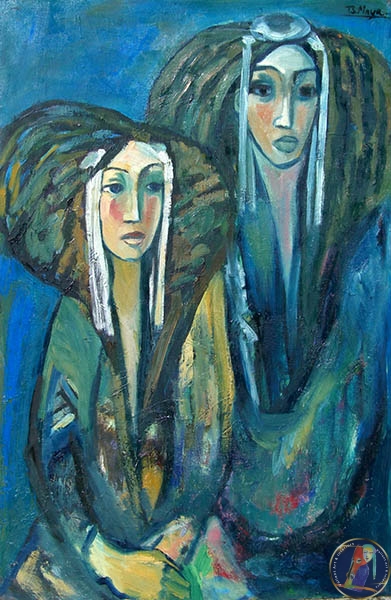
This oil on canvas painting, measuring 70 x 50cm, is a compelling example of Mydagmaa Tserenpil’s ability to merge minimalist figurative work with the atmospheric depth of the Mongolian landscape. Created in 2006, “Sisters” captures a quiet, intimate moment that leans heavily into the artist’s signature abstract-figurative style.

Composition and Subject Matter

The painting centers on two female figures—the “Sisters”—set against a vast, ethereal backdrop. Rather than focusing on sharp anatomical precision, Tserenpil employs a minimalist figurative approach. The sisters are rendered with soft, fluid lines, their forms occasionally blurring into the surrounding environment. This lack of rigid detail suggests a universal bond rather than a specific portrait, emphasizing the emotional and spiritual connection between the two subjects.

Color Palette and Texture

True to her roots in the Bayankhongor province, Tserenpil utilizes a palette that reflects the earthy yet mystical tones of the Mongolian steppe.

  • Atmospheric Hues: The background is likely a sophisticated blend of muted ochres, dusty roses, or cool greys, creating a sense of infinite space.

  • The “Oil on Canvas” Medium: The artist uses the texture of oil paint to create “veils” of color. Some areas may appear translucent, while others feature subtle impasto, giving the canvas a tactile, weathered quality reminiscent of aged silk or wind-swept plains.

Style and Influence

The work sits at the intersection of Abstract Expressionism and Minimalism.

  • Spatial Awareness: There is a profound sense of “Ma” (negative space) in the composition. By placing the figures within a large, uncluttered field, Tserenpil highlights the isolation and the silent strength inherent in the nomadic heritage.

  • Symbolism: The proximity of the two figures suggests protection and shared history. In the context of her 2010 exhibition at the Carrousel Du Louvre, this piece stood out for its ability to translate traditional Mongolian themes into a contemporary, global visual language.
  • Mydagmaa Tserenpil
  • Abstract, Calligraphy
  • Oil On Canvas
  • MYD62/009
  • 70 x 50cm
  • Mongolian Art Gallery

Add Your Comment

Mongolian Art Gallery © 2025. All Rights Reserved
Privacy Policy / Terms of Use

This oil on canvas painting, measuring 70 x 50cm, is a compelling example of Mydagmaa Tserenpil’s ability to merge minimalist figurative work with the atmospheric depth of the Mongolian landscape. Created in 2006, “Sisters” captures a quiet, intimate moment that leans heavily into the artist’s signature abstract-figurative style.

Composition and Subject Matter

The painting centers on two female figures—the “Sisters”—set against a vast, ethereal backdrop. Rather than focusing on sharp anatomical precision, Tserenpil employs a minimalist figurative approach. The sisters are rendered with soft, fluid lines, their forms occasionally blurring into the surrounding environment. This lack of rigid detail suggests a universal bond rather than a specific portrait, emphasizing the emotional and spiritual connection between the two subjects.

Color Palette and Texture

True to her roots in the Bayankhongor province, Tserenpil utilizes a palette that reflects the earthy yet mystical tones of the Mongolian steppe.

  • Atmospheric Hues: The background is likely a sophisticated blend of muted ochres, dusty roses, or cool greys, creating a sense of infinite space.

  • The “Oil on Canvas” Medium: The artist uses the texture of oil paint to create “veils” of color. Some areas may appear translucent, while others feature subtle impasto, giving the canvas a tactile, weathered quality reminiscent of aged silk or wind-swept plains.

Style and Influence

The work sits at the intersection of Abstract Expressionism and Minimalism.

  • Spatial Awareness: There is a profound sense of “Ma” (negative space) in the composition. By placing the figures within a large, uncluttered field, Tserenpil highlights the isolation and the silent strength inherent in the nomadic heritage.

  • Symbolism: The proximity of the two figures suggests protection and shared history. In the context of her 2010 exhibition at the Carrousel Du Louvre, this piece stood out for its ability to translate traditional Mongolian themes into a contemporary, global visual language.