
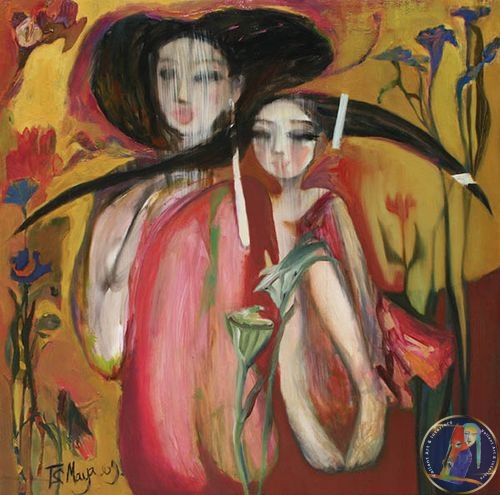
“Sisterhood” is a poignant exploration of human connection, rendered through Mydagmaa Tserenpil’s signature blend of minimalist figurativism and abstract landscape. Measuring 80 x 80cm, the square format of the canvas provides a balanced, intimate stage for a composition that prioritizes emotional resonance over literal detail.
Visual Composition and Style
The painting features a group of stylized female figures, likely drawing inspiration from the artist’s Mongolian heritage. Tserenpil utilizes a minimalist approach, stripping away anatomical specifics to focus on form, posture, and the collective silhouette. The figures are often depicted in flowing, simplified garments that merge with the background, suggesting a deep, intrinsic link between the subjects and the vast Mongolian horizon they inhabit.
Color Palette: True to her style, the palette is likely anchored in earthy, tonal hues—ochres, deep reds, or muted blues—reflecting the natural landscape of Bayankhongor. The use of oil paints allows for a rich, textured surface that adds weight to the otherwise ethereal figures.
Space and Atmosphere: The “Abstract Landscape” element is felt through a lack of defined perspective. Instead of a traditional horizon line, the artist uses color blocks and sweeping brushstrokes to evoke the feeling of open space, wind, and the timelessness of the steppe.
Theme and Symbolism
As the title suggests, the work is a meditation on communal identity and the invisible threads that bind women together. By simplifying the faces and bodies, Tserenpil elevates the subjects from specific individuals to universal archetypes of support and shared experience.
The proximity of the figures—often leaning toward one another or overlapping—symbolizes a collective strength. In the context of Mongolian culture, where nomadic traditions place a high value on familial and community bonds, “Sisterhood” serves as a contemporary tribute to the resilience and quiet power of women.