
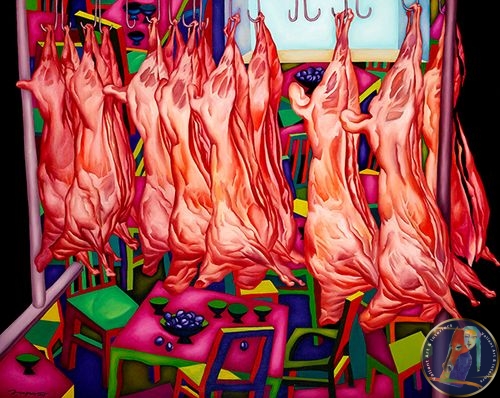
Show

Enkhjargal Tsagaandari , 2005 , Oil On Canvas

Created in 2005, Show is a substantial oil painting that exemplifies Enkhjargal Tsagaandari’s ability to bridge the gap between Mongolian figurative traditions and contemporary abstraction. Measuring nearly a meter and a half in height, the work possesses a commanding presence, utilizing its vertical orientation to create a sense of depth and theatricality.

The title, Show, suggests a performance or a display, which Tsagaandari explores through a vibrant, layered composition. While the artist is known for nature and landscapes, this piece leans into her modern and figurative styles, likely depicting a scene of cultural or social gathering filtered through an emotive, non-literal lens.

Visual Elements and Style

  • Color Palette: Given Tsagaandari’s background and the period of the mid-2000s, the work likely employs a rich, sophisticated palette. Expect a harmony of earthy Mongolian tones—ochres, deep reds, and blues—interspersed with bold, modern flashes of color that define the “show” aspect of the piece.

  • Brushwork and Texture: As an oil on canvas, the painting benefits from Tsagaandari’s experience in monumental art and teaching. The application is likely a mix of smooth, blended gradients and more expressive, textured impasto that gives the figures or abstract shapes a sense of movement and “liveness.”

  • Figurative Abstraction: The “show” is not depicted with photographic realism. Instead, Tsagaandari uses her signature contemporary-meets-traditional approach. Figures may appear stylized or elongated, merging with their background to suggest the energy and atmosphere of an event rather than a static snapshot.

Cultural Context

Tsagaandari belongs to a pivotal generation of Mongolian artists who transitioned from the rigid structures of the 1980s (seen in her early work with the UMA and Military Institute) to the total creative freedom of the post-2000 era.

In Show, we see the culmination of this journey. The painting reflects:

  • The Movement of People: Capturing the shift from nomadic solitude to the bustling, “performative” nature of modern Ulaanbaatar life.

  • Nature vs. Human Activity: Even in a piece titled Show, Tsagaandari’s roots in landscape art often bleed through, where the human figures may echo the shapes of the Mongolian steppe or rolling mountains.

Historical Significance

By 2005, Tsagaandari had established herself as a prominent freelance artist after years of teaching at the College of Fine Art. Show represents her mature style—a confident, large-scale exploration of how Mongolian identity projects itself in a globalized, contemporary world. It stands as a testament to her versatility, moving from the “Young Artist” exhibitions of the 80s to international showcases in China and Austria, ultimately settling into a voice that is uniquely her own.

  • Enkhjargal Tsagaandari
  • Figurative, Geometric, Realism
  • Oil On Canvas
  • ENJ25/028
  • 148.5 x 118.5cm
  • Mongolian Art Gallery

Add Your Comment

Mongolian Art Gallery © 2025. All Rights Reserved
Privacy Policy / Terms of Use

Created in 2005, Show is a substantial oil painting that exemplifies Enkhjargal Tsagaandari’s ability to bridge the gap between Mongolian figurative traditions and contemporary abstraction. Measuring nearly a meter and a half in height, the work possesses a commanding presence, utilizing its vertical orientation to create a sense of depth and theatricality.

The title, Show, suggests a performance or a display, which Tsagaandari explores through a vibrant, layered composition. While the artist is known for nature and landscapes, this piece leans into her modern and figurative styles, likely depicting a scene of cultural or social gathering filtered through an emotive, non-literal lens.

Visual Elements and Style

  • Color Palette: Given Tsagaandari’s background and the period of the mid-2000s, the work likely employs a rich, sophisticated palette. Expect a harmony of earthy Mongolian tones—ochres, deep reds, and blues—interspersed with bold, modern flashes of color that define the “show” aspect of the piece.

  • Brushwork and Texture: As an oil on canvas, the painting benefits from Tsagaandari’s experience in monumental art and teaching. The application is likely a mix of smooth, blended gradients and more expressive, textured impasto that gives the figures or abstract shapes a sense of movement and “liveness.”

  • Figurative Abstraction: The “show” is not depicted with photographic realism. Instead, Tsagaandari uses her signature contemporary-meets-traditional approach. Figures may appear stylized or elongated, merging with their background to suggest the energy and atmosphere of an event rather than a static snapshot.

Cultural Context

Tsagaandari belongs to a pivotal generation of Mongolian artists who transitioned from the rigid structures of the 1980s (seen in her early work with the UMA and Military Institute) to the total creative freedom of the post-2000 era.

In Show, we see the culmination of this journey. The painting reflects:

  • The Movement of People: Capturing the shift from nomadic solitude to the bustling, “performative” nature of modern Ulaanbaatar life.

  • Nature vs. Human Activity: Even in a piece titled Show, Tsagaandari’s roots in landscape art often bleed through, where the human figures may echo the shapes of the Mongolian steppe or rolling mountains.

Historical Significance

By 2005, Tsagaandari had established herself as a prominent freelance artist after years of teaching at the College of Fine Art. Show represents her mature style—a confident, large-scale exploration of how Mongolian identity projects itself in a globalized, contemporary world. It stands as a testament to her versatility, moving from the “Young Artist” exhibitions of the 80s to international showcases in China and Austria, ultimately settling into a voice that is uniquely her own.