
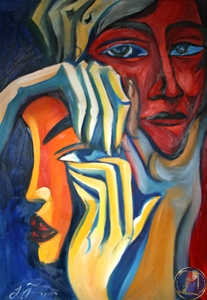
Red Face is a compelling large-format oil painting by the contemporary Mongolian artist Ganbold (Bono) Dorjderem. Measuring 100 x 150 cm, the work serves as a powerful exploration of human emotion through the lens of modern abstraction and figurative nude study.
Visual Composition and Style
The painting exemplifies Ganbold’s signature blend of Modern Figurative art and Abstract expressionism. The composition is dominated by a central figure, rendered with a raw, visceral energy that bridges the gap between the physical body and the internal psyche.
Color Palette: As the title suggests, the work is anchored by deep, emotive reds. These tones are not merely descriptive but symbolic, suggesting themes of vitality, passion, or perhaps the “aphorisms” of internal struggle mentioned in the artist’s exhibition history.
Form: While the piece is rooted in the Nude genre, the anatomical details are filtered through a contemporary lens. The artist utilizes bold, sweeping brushstrokes and a layered application of oil paint to create a sense of movement and psychological depth.
Atmosphere: The vast 150 cm width allows the figure to command the viewer’s space, creating a confrontation between the subject’s “red face”—a mask of intensity—and the observer.
Context and Provenance
Created during a prolific period in the artist’s career (circa 2007, coinciding with his “Freedom” and “Aphorism in Art” solo exhibitions), this piece reflects the evolving landscape of Mongolian contemporary art. Ganbold, born in Ulaanbaatar in 1982, emerged as a significant voice in the post-1990s generation of artists who moved away from traditional socialist realism toward personal, abstract narratives.
Technical Specifications
Artist: Ganbold / Bono Dorjderem (b. 1982)
Medium: Oil on Canvas
Dimensions: 100 x 150 cm
Accession Number: GND81/061
Artistic Significance
In Red Face, Ganbold strips away the ornamental to focus on the essential. By placing a figurative nude within an abstract environment, he emphasizes the vulnerability and the “freedom” of the human form. The work stands as a testament to the artist’s ability to translate complex philosophical concepts into a visual language that is both distinctly Mongolian and universally contemporary.