
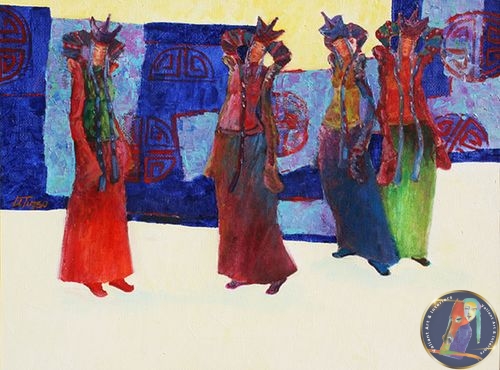
The painting features a group of noblewomen, or “Queens,” rendered in a style that fluctuates between figurative clarity and modern abstraction. The figures are arranged in a manner that suggests both a formal courtly lineup and a timeless, ethereal gathering.
The Headdresses: Central to the piece are the elaborate, wing-like headdresses (khalkha) traditional to Mongolian noblewomen. These structures dominate the upper third of the canvas, their sweeping silhouettes creating a rhythmic, architectural pattern that anchors the composition.
The Faces: Dondovdorj treats the faces with a blend of minimalist portraiture and modern stoicism. The expressions are serene and dignified, yet the features are often softened or partially obscured by layers of oil paint, suggesting the fading of memory or the weight of history.
Style and Technique
Consistent with Dondovdorj’s background from the Mongolian University of Arts and Culture, the technique is a sophisticated mix of academic discipline and avant-garde exploration.
Color Palette: The palette is likely rich yet controlled, utilizing earthy ochres, deep reds, and celestial blues—colors often associated with Mongolian silk embroidery and the landscape of the Zavkhan Aimag region.
Brushwork: The artist employs a contemporary figurative approach. In some areas, the paint is applied with precision to define the intricate patterns of the deels (traditional robes); in others, the brushwork becomes gestural and atmospheric, allowing the figures to bleed into the background.
Abstraction: The “Modern/Contemporary” influence is visible in the way the artist deconstructs the environment. Rather than a realistic palace setting, the queens exist in a textured, multi-layered space where color fields overlap, creating a sense of depth and mystery.
Symbolism and Tone
Queens is more than a historical reproduction; it is an exploration of identity and continuity. By painting this in 2008, Dondovdorj captures the “New Art” spirit of the post-socialist Mongolian art scene—honoring the power of the Mongolian matriarchy while reimagining it through a 21st-century lens.
The overall tone is one of majestic stillness. The figures command the canvas with a quiet authority, representing a cultural legacy that remains vibrant and immovable despite the shifting styles of the modern world.