
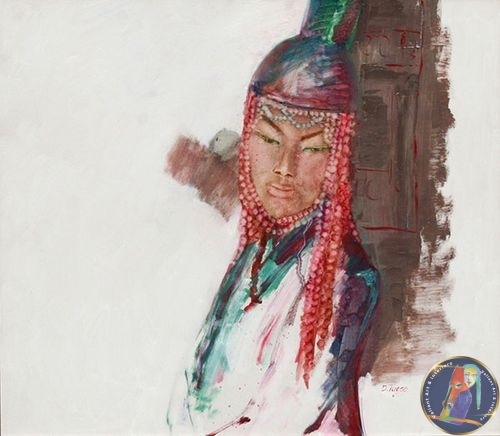
The painting presents a stylized, figurative depiction of a female figure—the “Queen”—rendered with a blend of modern abstraction and traditional poise. Rather than a strictly realist portrayal, Dondovdorj uses bold, confident brushwork to define the subject. The proportions are slightly elongated, lending the figure an air of aristocratic grace and historical weight.
Color Palette and Texture
True to the “Modern / Contemporary” style associated with the artist, the palette is likely a sophisticated mix of:
Deep Earth Tones: Reflecting the Mongolian landscape and traditional pigments.
Vibrant Accents: Sharp contrasts that highlight the regal attire or headgear.
Textural Depth: The oil medium is applied with varying thickness, creating a tactile surface that suggests both the softness of fabric and the rigid structure of royal ornaments.
Symbolism and Style
The “Portrait Queen” captures the essence of Mongolian identity. Dondovdorj often explores the intersection of his Zavkhan Aimag roots and the urban energy of Ulaanbaatar. The subject’s features are often distilled into essential lines, focusing on:
The Headdress: A focal point that pays homage to the complex, architectural hair and hat styles of the Khalkha Mongol nobility.
The Gaze: An enigmatic, calm expression that characterizes the “Figurative” style of his post-university era (2005–2009).
Artistic Context
Created just a few years after his graduation and his participation in major exhibitions like the Zanabazar Fine Art Museum’s “New Art” show, this 2009 piece represents Dondovdorj at a peak of stylistic transition.
“Portrait Queen” is not just a depiction of a person, but an exploration of cultural memory. It utilizes the freedom of the Abstract and Contemporary movements to reinterpret the classical Mongolian portraiture tradition for a 21st-century audience.