Poor

Odgerel Tsulbaatar , 2007 , Oil On Canvas

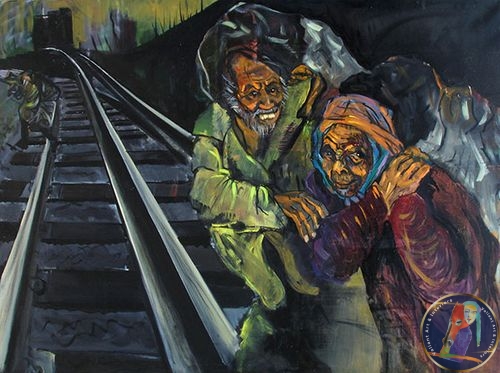
Odgerel Tsulbaatar’s 2007 work, “Poor,” is a poignant oil-on-canvas piece that exemplifies the artist’s ability to blend contemporary figurative styles with profound social commentary. Measuring 100 x 140cm, the painting utilizes its large horizontal scale to immerse the viewer in a scene that is as atmospheric as it is emotionally heavy.

Composition and Subject Matter

The painting centers on a figurative representation of poverty, likely influenced by the urban landscape of Ulaanbaatar. Rather than a purely documentary approach, Tsulbaatar leans into a Modern/Contemporary aesthetic that borders on the Abstract. The subject is often depicted with a sense of weight and weariness, where the human form seems almost to merge with its surroundings.

The composition typically utilizes:

  • A Somber Palette: Dominated by earthy tones—deep browns, grays, and muted ochres—which reflect both the physical grime of poverty and a sense of enduring dignity.

  • Textural Depth: The oil medium is applied with visible brushwork, creating a “Real Feel” (consistent with his 2006 exhibition series) that emphasizes the harshness of the subject’s environment.

  • Isolation: The figure is often positioned to evoke a sense of solitude within a crowded or indifferent world, a hallmark of Tsulbaatar’s portrait-driven work.

Style and Artistic Context

Created just two years after his graduation from the Fine Art University in Mongolia, “Poor” represents a transition point in Tsulbaatar’s career. It captures the raw energy of the “New Art” movement in Mongolia, moving away from traditional socialist realism toward a more personal, psychological exploration of the human condition.

The work bridges the gap between Figurative Art (clear human representation) and Abstract Art (where the background and emotional “vibe” take precedence over literal detail). The 100 x 140cm dimensions allow the artist to play with negative space, making the “poverty” of the subject feel expansive and inescapable.
  • Odgerel Tsulbaatar
  • Abstract, Figurative
  • Oil On Canvas
  • ODG43/025
  • 100 x 140cm
  • Mongolian Art Gallery

Add Your Comment

Mongolian Art Gallery © 2025. All Rights Reserved
Privacy Policy / Terms of Use

Odgerel Tsulbaatar’s 2007 work, “Poor,” is a poignant oil-on-canvas piece that exemplifies the artist’s ability to blend contemporary figurative styles with profound social commentary. Measuring 100 x 140cm, the painting utilizes its large horizontal scale to immerse the viewer in a scene that is as atmospheric as it is emotionally heavy.

Composition and Subject Matter

The painting centers on a figurative representation of poverty, likely influenced by the urban landscape of Ulaanbaatar. Rather than a purely documentary approach, Tsulbaatar leans into a Modern/Contemporary aesthetic that borders on the Abstract. The subject is often depicted with a sense of weight and weariness, where the human form seems almost to merge with its surroundings.

The composition typically utilizes:

  • A Somber Palette: Dominated by earthy tones—deep browns, grays, and muted ochres—which reflect both the physical grime of poverty and a sense of enduring dignity.

  • Textural Depth: The oil medium is applied with visible brushwork, creating a “Real Feel” (consistent with his 2006 exhibition series) that emphasizes the harshness of the subject’s environment.

  • Isolation: The figure is often positioned to evoke a sense of solitude within a crowded or indifferent world, a hallmark of Tsulbaatar’s portrait-driven work.

Style and Artistic Context

Created just two years after his graduation from the Fine Art University in Mongolia, “Poor” represents a transition point in Tsulbaatar’s career. It captures the raw energy of the “New Art” movement in Mongolia, moving away from traditional socialist realism toward a more personal, psychological exploration of the human condition.

The work bridges the gap between Figurative Art (clear human representation) and Abstract Art (where the background and emotional “vibe” take precedence over literal detail). The 100 x 140cm dimensions allow the artist to play with negative space, making the “poverty” of the subject feel expansive and inescapable.