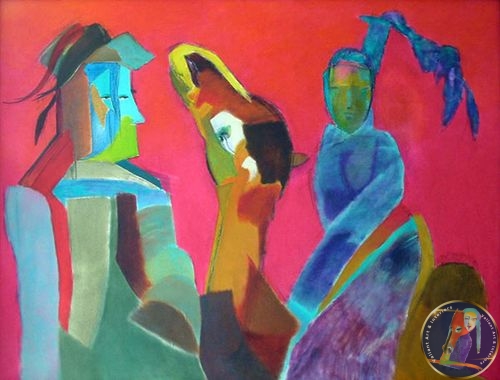
Painting 167

Munkhjin Tsultem , 2003 , Oil On Canvas

Painting 167 is a masterful example of Munkhjin Tsultem’s ability to merge his rigorous Russian academic training from the Stroganoff Institute with the soulful, expansive traditions of Mongolian contemporary art. Measuring 114 x 150 cm, the work offers a wide, cinematic field of view that emphasizes the atmospheric depth of its subject matter.

Style and Composition

True to Tsultem’s Contemporary Figurative style, the painting balances representational accuracy with a modern, expressive use of color and texture.

  • Color Palette: The 2003 work often utilizes the earthy, sophisticated tones characteristic of Tsultem’s “New Art” period—deep ochres, weathered blues, and muted crimsons that evoke the natural landscape and textiles of Mongolia.

  • Technique: The oil application is layered and deliberate. Tsultem employs a sophisticated play of light and shadow (chiaroscuro) that gives his figures a monumental, almost sculptural quality. There is a tactile richness to the canvas, where the brushwork feels both fluid and grounded.

  • Subject Matter: While “Painting 167” is a numerical title—suggesting a focus on formal qualities—the work typically features stylized human figures or cultural symbols. These figures are often depicted in moments of stillness or quiet introspection, reflecting the transition of Mongolian society from traditional nomadic roots to a modern, urban identity.

Artistic Context

As an artist born in Ulaanbaatar and educated in Moscow, Tsultem occupies a unique space in the art world. Painting 167 serves as a bridge between two worlds:

  1. The Academic: The structural integrity and anatomical precision learned in Russia.

  2. The Cultural: The spiritual and philosophical “Mongol Zurag” influence, which prioritizes the emotional essence of the subject over mere photographic realism.

Legacy and Impact

Created over two decades after his debut in international exhibitions like Warsaw and Brno, this piece represents Tsultem in his prime. It captures the quiet dignity and enduring strength of the Mongolian spirit, presented through a lens that is globally accessible yet deeply personal.
  • Munkhjin Tsultem
  • Abstract, Expressionist
  • Oil On Canvas
  • MUN35/006
  • 114 x 150cm
  • Mongolian Art Gallery

Add Your Comment

Mongolian Art Gallery © 2025. All Rights Reserved
Privacy Policy / Terms of Use

Painting 167 is a masterful example of Munkhjin Tsultem’s ability to merge his rigorous Russian academic training from the Stroganoff Institute with the soulful, expansive traditions of Mongolian contemporary art. Measuring 114 x 150 cm, the work offers a wide, cinematic field of view that emphasizes the atmospheric depth of its subject matter.

Style and Composition

True to Tsultem’s Contemporary Figurative style, the painting balances representational accuracy with a modern, expressive use of color and texture.

  • Color Palette: The 2003 work often utilizes the earthy, sophisticated tones characteristic of Tsultem’s “New Art” period—deep ochres, weathered blues, and muted crimsons that evoke the natural landscape and textiles of Mongolia.

  • Technique: The oil application is layered and deliberate. Tsultem employs a sophisticated play of light and shadow (chiaroscuro) that gives his figures a monumental, almost sculptural quality. There is a tactile richness to the canvas, where the brushwork feels both fluid and grounded.

  • Subject Matter: While “Painting 167” is a numerical title—suggesting a focus on formal qualities—the work typically features stylized human figures or cultural symbols. These figures are often depicted in moments of stillness or quiet introspection, reflecting the transition of Mongolian society from traditional nomadic roots to a modern, urban identity.

Artistic Context

As an artist born in Ulaanbaatar and educated in Moscow, Tsultem occupies a unique space in the art world. Painting 167 serves as a bridge between two worlds:

  1. The Academic: The structural integrity and anatomical precision learned in Russia.

  2. The Cultural: The spiritual and philosophical “Mongol Zurag” influence, which prioritizes the emotional essence of the subject over mere photographic realism.

Legacy and Impact

Created over two decades after his debut in international exhibitions like Warsaw and Brno, this piece represents Tsultem in his prime. It captures the quiet dignity and enduring strength of the Mongolian spirit, presented through a lens that is globally accessible yet deeply personal.