
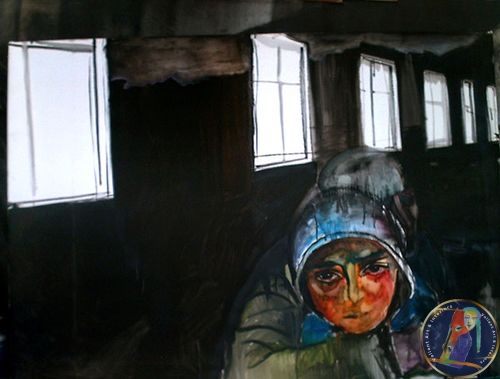
Nuurschin

Odgerel Tsulbaatar , 2006 , Oil On Canvas

Nuurschin (which translates to “Coalman”) is a striking example of Odgerel Tsulbaatar’s ability to merge modern figurative realism with a raw, contemporary abstract sensibility. The painting is a large-scale horizontal composition that captures a moment of intense, gritty labor, characteristic of the socio-economic landscape of Mongolia in the mid-2000s.

The piece is dominated by a dark, earthy palette. Tsulbaatar utilizes the textural qualities of oil paint to mimic the soot, dust, and physical weight of coal. Deep blacks, charcoal greys, and muddy browns are applied with bold, expressive brushstrokes, blurring the lines between the subject and his environment.


The Subject: The Coalman

At the heart of the canvas is a central figure—the “Nuurschin.” The portrayal is deeply figurative yet stylized:

  • Physicality: The artist emphasizes the physical strain of the work. The figure’s form is often rendered with heavy impasto, giving the skin a weathered, “caked” appearance that suggests a life lived in the mines or delivering fuel during Ulaanbaatar’s harsh winters.

  • The Face: Following Tsulbaatar’s penchant for portraiture, the face serves as the emotional anchor. The eyes are often the only point of high contrast, peering out from a face blackened by coal dust, reflecting a mixture of exhaustion, resilience, and stoicism.

  • Movement: There is a sense of “Modern” dynamism in the work. The background isn’t static; it feels like a swirling vortex of smoke and cold air, achieved through abstract sweeps of the palette knife that suggest the movement of shoveling or the biting Mongolian wind.


Symbolic and Contextual Depth

Created in 2006—the same year Tsulbaatar participated in the “Great Mongol 800” exhibition—this painting stands as a commentary on the “Real Feel” of Mongolian life.

While many artists of that era focused on nomadic nostalgia or historical grandeur, Tsulbaatar’s Nuurschin looks directly at the urban reality. The coalman is a vital yet often invisible figure in Ulaanbaatar, providing the warmth necessary for survival in the coldest capital city on earth. By placing this figure on a massive 140cm wide canvas, the artist elevates the common laborer to a heroic, albeit somber, status.

  • Odgerel Tsulbaatar
  • Abstract, Figurative
  • Oil On Canvas
  • ODG43/006
  • 100 x 140cm
  • Mongolian Art Gallery

Add Your Comment

Mongolian Art Gallery © 2025. All Rights Reserved
Privacy Policy / Terms of Use

Nuurschin (which translates to “Coalman”) is a striking example of Odgerel Tsulbaatar’s ability to merge modern figurative realism with a raw, contemporary abstract sensibility. The painting is a large-scale horizontal composition that captures a moment of intense, gritty labor, characteristic of the socio-economic landscape of Mongolia in the mid-2000s.

The piece is dominated by a dark, earthy palette. Tsulbaatar utilizes the textural qualities of oil paint to mimic the soot, dust, and physical weight of coal. Deep blacks, charcoal greys, and muddy browns are applied with bold, expressive brushstrokes, blurring the lines between the subject and his environment.


The Subject: The Coalman

At the heart of the canvas is a central figure—the “Nuurschin.” The portrayal is deeply figurative yet stylized:

  • Physicality: The artist emphasizes the physical strain of the work. The figure’s form is often rendered with heavy impasto, giving the skin a weathered, “caked” appearance that suggests a life lived in the mines or delivering fuel during Ulaanbaatar’s harsh winters.

  • The Face: Following Tsulbaatar’s penchant for portraiture, the face serves as the emotional anchor. The eyes are often the only point of high contrast, peering out from a face blackened by coal dust, reflecting a mixture of exhaustion, resilience, and stoicism.

  • Movement: There is a sense of “Modern” dynamism in the work. The background isn’t static; it feels like a swirling vortex of smoke and cold air, achieved through abstract sweeps of the palette knife that suggest the movement of shoveling or the biting Mongolian wind.


Symbolic and Contextual Depth

Created in 2006—the same year Tsulbaatar participated in the “Great Mongol 800” exhibition—this painting stands as a commentary on the “Real Feel” of Mongolian life.

While many artists of that era focused on nomadic nostalgia or historical grandeur, Tsulbaatar’s Nuurschin looks directly at the urban reality. The coalman is a vital yet often invisible figure in Ulaanbaatar, providing the warmth necessary for survival in the coldest capital city on earth. By placing this figure on a massive 140cm wide canvas, the artist elevates the common laborer to a heroic, albeit somber, status.