
1. Subject Matter and Central Figure
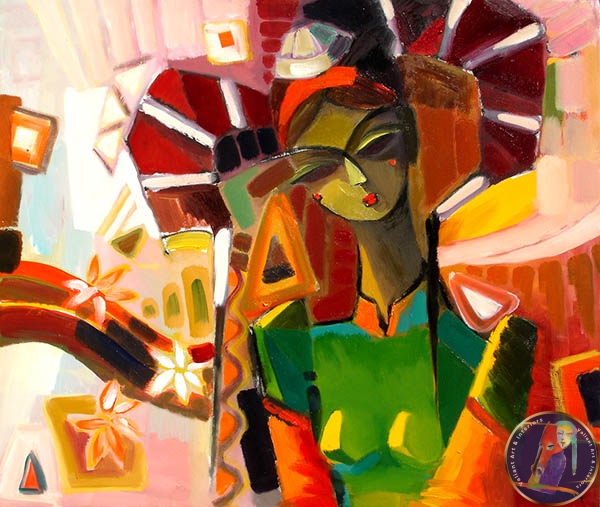
The painting features a central figurative portrait of a young Mongolian woman—the “New Bride”—presented from the torso up. She is positioned slightly off-center to create a dynamic, intimate composition. Her posture is formal yet delicate, capturing the profound emotional transition of a traditional Mongolian wedding. Her expression is a nuanced blend of serene dignity, quiet contemplation, and a hint of vulnerability, characteristic of Sodnom’s celebrated focus on the inner lives of women.
2. Costume and Traditional Attire
The bride is adorned in highly detailed, traditional Mongolian wedding garments (deel), rendered with rich, impasto brushstrokes that give texture to the oil paint.
The Deel: The garment is depicted in vibrant, symbolic colors—deep crimson reds or rich silks—intricately trimmed with traditional geometric patterns along the high collar and asymmetrical front closure.
The Headdress: A focal point of the painting is her elaborate, traditional Khalkha wedding headdress (uuj or bortog). The artist meticulously captures the weight and texture of the silver craftsmanship, coral, and turquoise beadwork cascading down the sides of the bride’s face, framing her features. The crown of the headdress extends toward the upper edge of the 51 x 61 cm canvas, establishing a strong vertical presence.
3. Composition, Color Palette, and Lighting
Spatial Arrangement: The background is intentionally semi-abstracted and atmospheric, preventing distraction from the bride’s emotional presence. Subtle textures and visible brushwork suggest the interior of a traditional dwelling (ger) or the soft, hazy light of the Mongolian steppe.
Color Scheme: The palette balances the vivid, warm tones of the bridal attire (reds, golds, and deep blues) against a muted, earthy background of ochres, soft browns, and cool grays. This contrast pulls the viewer’s eye directly to the central figure.
Lighting: Chiaroscuro—the dramatic contrast between light and shadow—is used softly to illuminate one side of the bride’s face. The light catches the metallic gleam of her silver ornaments and the smooth texture of her skin, while the other side gently recedes into shadow, amplifying the reflective, internal mood of the piece.
4. Style and Execution
Sodnom fuses academic realism (honed during her studies at the Fine Art University in Ulaanbaatar) with a expressive, modern nomadic aesthetic. The painting shifts beautifully between tight, controlled details—such as the intricate beads of the jewelry and the contours of the face—and loose, fluid, impressionistic brushstrokes in the background and the folds of the fabric. The tactile quality of the oil on canvas gives the portrait a timeless, enduring presence.
Conceptual Context
Within the 51 x 61 cm frame, New Bride acts as a cultural bridge. It simultaneously honors centuries-old Mongolian traditions and elevates the individual psychology of the modern woman. Rather than just presenting a static ethnographic study of traditional dress, Sodnom captures a raw, human moment of passage—the quiet space a woman occupies just as she enters a new chapter of life.