Nature 61

Tumurbaatar Badarch , 2006 , Pastel On Paper

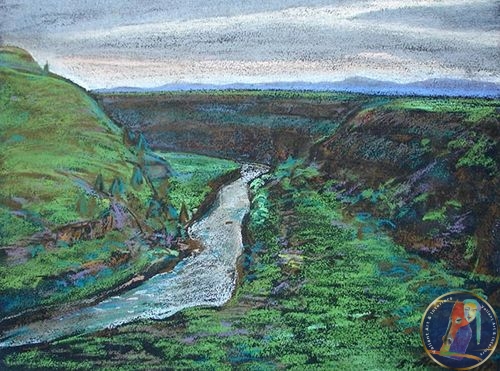
Nature 61 is a compelling testament to Tumurbaatar Badarch’s mastery of the pastel medium and his deep-rooted connection to the Mongolian landscape. Measuring 30 x 40cm, this work on paper captures a moment of profound stillness, characteristic of his realistic yet emotive style.

Visual Composition and Style

The painting is a masterclass in Realism, focusing on the tactile textures of the natural world. Badarch utilizes the soft, blendable nature of pastels to create a seamless transition between light and shadow. The composition likely draws the viewer into a specific niche of the Mongolian wilderness—perhaps a rocky outcrop, a stretch of steppe, or the edge of a forest—rendered with the architectural precision he honed during his studies at the Mukhin Institute of Industrial Art.

  • Medium & Texture: The use of pastel on paper allows for a rich, velvety surface. Badarch likely employed a layering technique to build up the density of the earth and the airy quality of the Mongolian sky, resulting in a physical depth that belies the two-dimensional surface.

  • Color Palette: Given his association with nature and landscapes, the palette is expected to be grounded in earthy ochres, deep greens, and the brilliant, “eternal blue” sky characteristic of his homeland.

  • Atmosphere: There is a signature “quietude” in Badarch’s work. Nature 61 is not just a photographic reproduction of a place, but a study of the atmosphere—capturing the crispness of the air and the specific slant of light that defines the high-altitude Mongolian terrain.


About the Artist: Tumurbaatar Badarch

Born in 1958 in Ulaanbaatar, Badarch belongs to a generation of Mongolian artists who successfully bridged the gap between traditional Mongolian sensibilities and rigorous European technical training.

  • Academic Background: His education is split between the College of Fine Art in Ulaanbaatar (1978) and the prestigious Mukhin Institute in St. Petersburg (1985). This dual influence is visible in his work: the Russian school provided him with a structural, classical foundation, while his Mongolian heritage provided his lifelong subject matter.

  • Career Highlights: A member of the “Oron Zai” (Space) art association, Badarch has been a fixture in the Mongolian art scene since 1978. His work has traveled globally, representing Mongolian contemporary realism in Italy, Korea, France, and Hong Kong.
  • Tumurbaatar Badarch
  • Nature, Realism
  • Pastel On Paper
  • TUM67/028
  • 30 x 40cm
  • Mongolian Art Gallery

Add Your Comment

Mongolian Art Gallery © 2025. All Rights Reserved
Privacy Policy / Terms of Use

Nature 61 is a compelling testament to Tumurbaatar Badarch’s mastery of the pastel medium and his deep-rooted connection to the Mongolian landscape. Measuring 30 x 40cm, this work on paper captures a moment of profound stillness, characteristic of his realistic yet emotive style.

Visual Composition and Style

The painting is a masterclass in Realism, focusing on the tactile textures of the natural world. Badarch utilizes the soft, blendable nature of pastels to create a seamless transition between light and shadow. The composition likely draws the viewer into a specific niche of the Mongolian wilderness—perhaps a rocky outcrop, a stretch of steppe, or the edge of a forest—rendered with the architectural precision he honed during his studies at the Mukhin Institute of Industrial Art.

  • Medium & Texture: The use of pastel on paper allows for a rich, velvety surface. Badarch likely employed a layering technique to build up the density of the earth and the airy quality of the Mongolian sky, resulting in a physical depth that belies the two-dimensional surface.

  • Color Palette: Given his association with nature and landscapes, the palette is expected to be grounded in earthy ochres, deep greens, and the brilliant, “eternal blue” sky characteristic of his homeland.

  • Atmosphere: There is a signature “quietude” in Badarch’s work. Nature 61 is not just a photographic reproduction of a place, but a study of the atmosphere—capturing the crispness of the air and the specific slant of light that defines the high-altitude Mongolian terrain.


About the Artist: Tumurbaatar Badarch

Born in 1958 in Ulaanbaatar, Badarch belongs to a generation of Mongolian artists who successfully bridged the gap between traditional Mongolian sensibilities and rigorous European technical training.

  • Academic Background: His education is split between the College of Fine Art in Ulaanbaatar (1978) and the prestigious Mukhin Institute in St. Petersburg (1985). This dual influence is visible in his work: the Russian school provided him with a structural, classical foundation, while his Mongolian heritage provided his lifelong subject matter.

  • Career Highlights: A member of the “Oron Zai” (Space) art association, Badarch has been a fixture in the Mongolian art scene since 1978. His work has traveled globally, representing Mongolian contemporary realism in Italy, Korea, France, and Hong Kong.