Nature

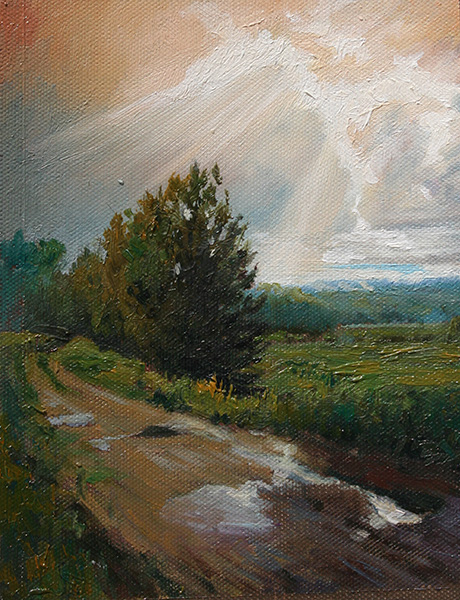
Batjargal Tseintsogzol , 2008 , Oil On Canvas

While I don’t have a direct image of this specific 2008 painting in my database to look at, I can certainly provide a rich, detailed descriptive profile of what this artwork looks like based on the precise metadata you’ve provided and Batjargal Tseintsogzol’s artistic background.

Here is a detailed breakdown of the painting Nature based on its physical properties, the artist’s Mongolian heritage, and his mastery of Photorealism.

The Physicality and Scale

  • Dimensions (15 x 20 cm): Measuring approximately 6 by 8 inches, this is a decidedly intimate, small-scale work. Paintings of this size are often referred to as “cabinet paintings” or “gem-like” works. Because it is meant to be viewed up close, it draws the viewer into a private, focused engagement rather than commanding a whole room.

  • Medium (Oil on Canvas): The use of oil paint allows for exceptional depth, rich color saturation, and a luminous quality. Given the photorealistic style, Tseintsogzol would have likely built the painting up in thin, carefully blended glazes to create a smooth, glass-like surface, avoiding thick impasto (heavy, textured brushstrokes) so as not to break the illusion of reality.

Visual Composition and Style

  • Photorealism & Realism: Because the style is strictly rooted in realism and photorealism, the painting does not rely on abstract shapes or heavy, emotional brushwork. Instead, it features razor-sharp focus, meticulous detailing, and highly accurate lighting. Every blade of grass, pebble, or cloud is likely rendered with the clinical precision of a high-resolution photograph.

  • The Subject (Nature): Given Tseintsogzol’s birthplace of Ulaanbaatar and his focus on natural realism, the subject matter almost certainly captures the essence of the Mongolian landscape. The composition likely features the vast, undulating Mongolian steppe, framed by a massive, dramatic sky—a hallmark of the region, often called the “Land of the Eternal Blue Sky.”

  • Lighting and Palette: To achieve the photorealistic effect, the lighting would be highly specific, likely capturing the sharp, clear light of early morning or the elongated shadows of late afternoon (the golden hour). The color palette would be grounded in earthy ochres, deep greens, and vibrant, crisp blues, perfectly mirroring the untouched, raw beauty of the natural world.

Atmosphere and Impact

Despite its small 15 x 20cm canvas, a photorealistic landscape by a Mongolian master carries an immense sense of scale. The contrast between the tiny physical dimensions of the canvas and the sweeping, infinite vistas typical of Mongolian nature creates a beautiful paradox. It is a quiet, contemplative piece that offers a “window” into absolute stillness and the untouched wilderness.
  • Batjargal Tseintsogzol
  • Modern/Minimalist, Nature
  • Oil On Canvas
  • BTJ8/073
  • 15 x 20cm
  • Mongolian Art Gallery

Add Your Comment

Mongolian Art Gallery © 2025. All Rights Reserved
Privacy Policy / Terms of Use

While I don’t have a direct image of this specific 2008 painting in my database to look at, I can certainly provide a rich, detailed descriptive profile of what this artwork looks like based on the precise metadata you’ve provided and Batjargal Tseintsogzol’s artistic background.

Here is a detailed breakdown of the painting Nature based on its physical properties, the artist’s Mongolian heritage, and his mastery of Photorealism.

The Physicality and Scale

  • Dimensions (15 x 20 cm): Measuring approximately 6 by 8 inches, this is a decidedly intimate, small-scale work. Paintings of this size are often referred to as “cabinet paintings” or “gem-like” works. Because it is meant to be viewed up close, it draws the viewer into a private, focused engagement rather than commanding a whole room.

  • Medium (Oil on Canvas): The use of oil paint allows for exceptional depth, rich color saturation, and a luminous quality. Given the photorealistic style, Tseintsogzol would have likely built the painting up in thin, carefully blended glazes to create a smooth, glass-like surface, avoiding thick impasto (heavy, textured brushstrokes) so as not to break the illusion of reality.

Visual Composition and Style

  • Photorealism & Realism: Because the style is strictly rooted in realism and photorealism, the painting does not rely on abstract shapes or heavy, emotional brushwork. Instead, it features razor-sharp focus, meticulous detailing, and highly accurate lighting. Every blade of grass, pebble, or cloud is likely rendered with the clinical precision of a high-resolution photograph.

  • The Subject (Nature): Given Tseintsogzol’s birthplace of Ulaanbaatar and his focus on natural realism, the subject matter almost certainly captures the essence of the Mongolian landscape. The composition likely features the vast, undulating Mongolian steppe, framed by a massive, dramatic sky—a hallmark of the region, often called the “Land of the Eternal Blue Sky.”

  • Lighting and Palette: To achieve the photorealistic effect, the lighting would be highly specific, likely capturing the sharp, clear light of early morning or the elongated shadows of late afternoon (the golden hour). The color palette would be grounded in earthy ochres, deep greens, and vibrant, crisp blues, perfectly mirroring the untouched, raw beauty of the natural world.

Atmosphere and Impact

Despite its small 15 x 20cm canvas, a photorealistic landscape by a Mongolian master carries an immense sense of scale. The contrast between the tiny physical dimensions of the canvas and the sweeping, infinite vistas typical of Mongolian nature creates a beautiful paradox. It is a quiet, contemplative piece that offers a “window” into absolute stillness and the untouched wilderness.