
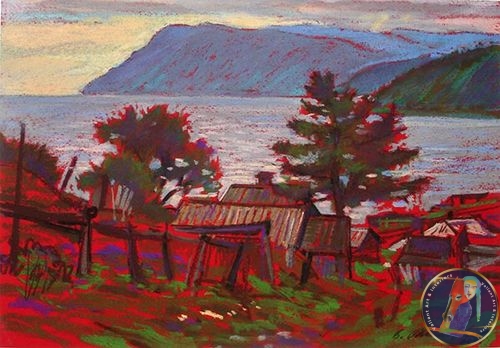
Nature 45

Tumurbaatar Badarch , 2006 , Pastel On Paper

Nature 45 is a contemplative exploration of the Mongolian landscape, rendered with the soft, tactile precision characteristic of high-quality pastel work. Given Badarch’s background in Realism, the painting likely avoids abstraction in favor of a faithful, atmospheric representation of the natural world.

  • Composition and Perspective: At 30 x 40 cm, the work is intimate, drawing the viewer into a specific corner of the wilderness rather than a sweeping, distant panorama. The composition typically balances the vastness of the Mongolian sky with the rugged texture of the earth.

  • The Medium: The use of pastel on paper allows for a velvety texture. Badarch utilizes the blending capabilities of the medium to create soft gradients in the sky—perhaps capturing the hazy light of dusk or the crisp clarity of a mountain morning—contrasted against sharp, rhythmic strokes used to define dry grasses, rocky outcrops, or distant foothills.

  • Color Palette: Reflecting the “Nature” series theme, the palette is likely grounded in earthy ochres, deep burnt siennas, and muted greens, punctuated by the ethereal blues or soft violets of the Mongolian horizon.


Artistic Context & Style

Tumurbaatar Badarch’s work is a synthesis of his Mongolian heritage and his formal academic training in Russia.

  • The Russian Influence: His education at the Mukhin Institute of Industrial Art in St. Petersburg provided him with a rigorous foundation in classical technique and structural form. This is evident in the disciplined proportions and spatial logic of Nature 45.

  • The Mongolian Soul: Despite the formal Russian training, his subject matter remains deeply rooted in the spirit of his homeland. His membership in the “Oron Zai” (Space) art association suggests a career-long fascination with how physical space and environment shape the human experience.

  • Realism vs. Atmosphere: While categorized under Realism, Badarch’s nature studies often lean toward “Lyrical Realism.” He doesn’t just document a location; he captures the mood of the air and the specific “weight” of the light in the Mongolian highlands.

  • Tumurbaatar Badarch
  • Landscape, Nature
  • Pastel On Paper
  • TUM67/004
  • 30 x 40cm
  • Mongolian Art Gallery

Add Your Comment

Mongolian Art Gallery © 2025. All Rights Reserved
Privacy Policy / Terms of Use

Nature 45 is a contemplative exploration of the Mongolian landscape, rendered with the soft, tactile precision characteristic of high-quality pastel work. Given Badarch’s background in Realism, the painting likely avoids abstraction in favor of a faithful, atmospheric representation of the natural world.

  • Composition and Perspective: At 30 x 40 cm, the work is intimate, drawing the viewer into a specific corner of the wilderness rather than a sweeping, distant panorama. The composition typically balances the vastness of the Mongolian sky with the rugged texture of the earth.

  • The Medium: The use of pastel on paper allows for a velvety texture. Badarch utilizes the blending capabilities of the medium to create soft gradients in the sky—perhaps capturing the hazy light of dusk or the crisp clarity of a mountain morning—contrasted against sharp, rhythmic strokes used to define dry grasses, rocky outcrops, or distant foothills.

  • Color Palette: Reflecting the “Nature” series theme, the palette is likely grounded in earthy ochres, deep burnt siennas, and muted greens, punctuated by the ethereal blues or soft violets of the Mongolian horizon.


Artistic Context & Style

Tumurbaatar Badarch’s work is a synthesis of his Mongolian heritage and his formal academic training in Russia.

  • The Russian Influence: His education at the Mukhin Institute of Industrial Art in St. Petersburg provided him with a rigorous foundation in classical technique and structural form. This is evident in the disciplined proportions and spatial logic of Nature 45.

  • The Mongolian Soul: Despite the formal Russian training, his subject matter remains deeply rooted in the spirit of his homeland. His membership in the “Oron Zai” (Space) art association suggests a career-long fascination with how physical space and environment shape the human experience.

  • Realism vs. Atmosphere: While categorized under Realism, Badarch’s nature studies often lean toward “Lyrical Realism.” He doesn’t just document a location; he captures the mood of the air and the specific “weight” of the light in the Mongolian highlands.