
Nature 13

Tumurbaatar Badarch , 2006 , Pastel On Paper

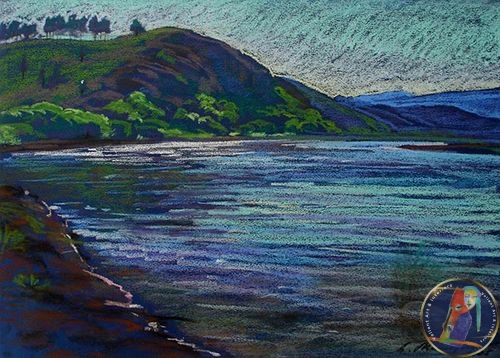
In Nature 13, Tumurbaatar Badarch leverages the soft, tactile qualities of pastel to capture the rugged, atmospheric beauty of the Mongolian landscape. As a master of Realism, Badarch avoids over-idealization, instead focusing on the nuanced interplay of light and texture found in the natural world.

  • Composition and Perspective: The painting likely employs a wide-angle perspective typical of the Mongolian steppe, emphasizing the vastness of the horizon. Despite the relatively intimate size of the paper (30 x 40 cm), the artist creates a sense of infinite space through atmospheric perspective—where distant landforms fade into soft, hazy blues and greys.

  • Color Palette: Given the “Nature” series theme, the palette is rooted in earth tones. Expect a sophisticated layering of ochres, burnt umbers, and muted greens representing the hardy vegetation of the region. The sky likely serves as a primary light source, rendered in delicate gradients of pale cerulean or cream, reflecting the high-altitude clarity of Mongolia.

  • Texture and Technique: The use of pastel on paper allows for a “painterly” feel without the gloss of oils. Badarch utilizes the grain of the paper to mimic the grit of stone and the softness of distant clouds. Small, precise strokes define the jagged edges of rocky outcroppings, while broader, blended strokes suggest the rolling movement of the hills.


Artistic Context

The work reflects Badarch’s rigorous academic background, blending the traditional training of the College of Fine Art in Ulaanbaatar with the sophisticated technical precision of the Mukhin Institute in St. Petersburg.

Nature 13 is not merely a topographical record; it is a meditation on the permanence of the earth. By focusing on the uninhabited landscape, Badarch highlights the “Realism” of the environment itself—stripped of human narrative, leaving only the raw, quiet power of the Mongolian wilderness.

This piece fits within his broader body of work exhibited globally—from Italy to Korea—serving as a bridge between the specific geography of his birthplace and the universal language of landscape art.
  • Tumurbaatar Badarch
  • Nature
  • Pastel On Paper
  • TUM67/031
  • 30 x 40cm
  • Mongolian Art Gallery

Add Your Comment

Mongolian Art Gallery © 2025. All Rights Reserved
Privacy Policy / Terms of Use

In Nature 13, Tumurbaatar Badarch leverages the soft, tactile qualities of pastel to capture the rugged, atmospheric beauty of the Mongolian landscape. As a master of Realism, Badarch avoids over-idealization, instead focusing on the nuanced interplay of light and texture found in the natural world.

  • Composition and Perspective: The painting likely employs a wide-angle perspective typical of the Mongolian steppe, emphasizing the vastness of the horizon. Despite the relatively intimate size of the paper (30 x 40 cm), the artist creates a sense of infinite space through atmospheric perspective—where distant landforms fade into soft, hazy blues and greys.

  • Color Palette: Given the “Nature” series theme, the palette is rooted in earth tones. Expect a sophisticated layering of ochres, burnt umbers, and muted greens representing the hardy vegetation of the region. The sky likely serves as a primary light source, rendered in delicate gradients of pale cerulean or cream, reflecting the high-altitude clarity of Mongolia.

  • Texture and Technique: The use of pastel on paper allows for a “painterly” feel without the gloss of oils. Badarch utilizes the grain of the paper to mimic the grit of stone and the softness of distant clouds. Small, precise strokes define the jagged edges of rocky outcroppings, while broader, blended strokes suggest the rolling movement of the hills.


Artistic Context

The work reflects Badarch’s rigorous academic background, blending the traditional training of the College of Fine Art in Ulaanbaatar with the sophisticated technical precision of the Mukhin Institute in St. Petersburg.

Nature 13 is not merely a topographical record; it is a meditation on the permanence of the earth. By focusing on the uninhabited landscape, Badarch highlights the “Realism” of the environment itself—stripped of human narrative, leaving only the raw, quiet power of the Mongolian wilderness.

This piece fits within his broader body of work exhibited globally—from Italy to Korea—serving as a bridge between the specific geography of his birthplace and the universal language of landscape art.