
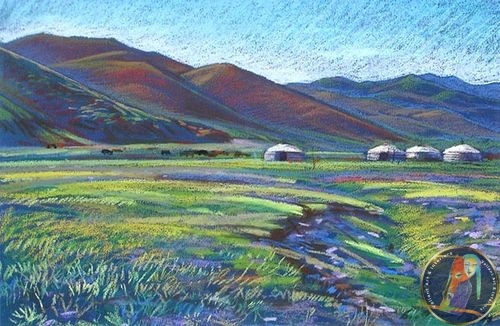
Nature 10

Tumurbaatar Badarch , 2006 , Pastel On Paper

Nature 10 is an evocative exploration of the Mongolian landscape, rendered with the soft, tactile precision of pastel on paper. Measuring 30 x 40 cm, the work is a testament to Badarch’s mastery of Realism, flavored by the academic rigor of his training at the Mukhin Institute in St. Petersburg.

Visual Composition and Atmosphere

The painting captures a serene, untouched corner of the natural world, likely inspired by the vast steppes or mountain foothills of the artist’s homeland. Because it was created using pastels, the textures are velvety and rich, allowing for seamless transitions between the earthy tones of the terrain and the ethereal quality of the light.

  • Color Palette: The work utilizes a sophisticated range of natural hues—deep ochres, muted greens, and cool slate grays. Badarch excels at capturing the “Golden Hour” or the hazy atmosphere of a Mongolian afternoon, where the light softens the sharp edges of the physical world.

  • Technique: The artist employs a layering technique characteristic of his realism style. Through the fine application of pastel, he builds depth in the foreground—perhaps highlighting the ruggedness of local flora or the rhythmic patterns of stones—while allowing the background to recede into a soft, atmospheric blur.

  • Theme: As part of his “Nature” series, this 2006 piece emphasizes the stillness and permanence of the environment. There is a photographic quality to the proportions, yet the hand of the artist is visible in the delicate blending of colors that give the landscape a soulful, almost meditative presence.

Artistic Context

Created three years after his major solo exhibition Gerege at the Art Gallery of the UMA, Nature 10 represents Badarch at the height of his career. It reflects a synthesis of two worlds: the industrial and classical precision of his Russian education and the spiritual, expansive connection to the Mongolian landscape.

The painting serves as a quiet dialogue between th
  • Tumurbaatar Badarch
  • Calligraphy, Nature
  • Pastel On Paper
  • TUM67/034
  • 30 x 40cm
  • Mongolian Art Gallery

Add Your Comment

Mongolian Art Gallery © 2025. All Rights Reserved
Privacy Policy / Terms of Use

Nature 10 is an evocative exploration of the Mongolian landscape, rendered with the soft, tactile precision of pastel on paper. Measuring 30 x 40 cm, the work is a testament to Badarch’s mastery of Realism, flavored by the academic rigor of his training at the Mukhin Institute in St. Petersburg.

Visual Composition and Atmosphere

The painting captures a serene, untouched corner of the natural world, likely inspired by the vast steppes or mountain foothills of the artist’s homeland. Because it was created using pastels, the textures are velvety and rich, allowing for seamless transitions between the earthy tones of the terrain and the ethereal quality of the light.

  • Color Palette: The work utilizes a sophisticated range of natural hues—deep ochres, muted greens, and cool slate grays. Badarch excels at capturing the “Golden Hour” or the hazy atmosphere of a Mongolian afternoon, where the light softens the sharp edges of the physical world.

  • Technique: The artist employs a layering technique characteristic of his realism style. Through the fine application of pastel, he builds depth in the foreground—perhaps highlighting the ruggedness of local flora or the rhythmic patterns of stones—while allowing the background to recede into a soft, atmospheric blur.

  • Theme: As part of his “Nature” series, this 2006 piece emphasizes the stillness and permanence of the environment. There is a photographic quality to the proportions, yet the hand of the artist is visible in the delicate blending of colors that give the landscape a soulful, almost meditative presence.

Artistic Context

Created three years after his major solo exhibition Gerege at the Art Gallery of the UMA, Nature 10 represents Badarch at the height of his career. It reflects a synthesis of two worlds: the industrial and classical precision of his Russian education and the spiritual, expansive connection to the Mongolian landscape.

The painting serves as a quiet dialogue between th