

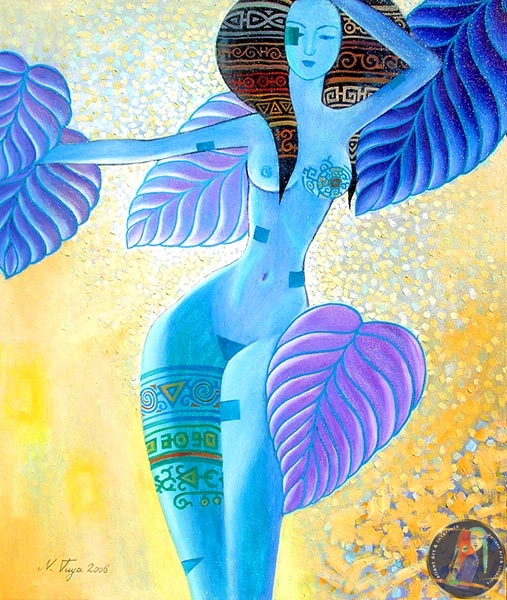
Namriin Haylag (translatable from Mongolian as “The Echo of Autumn” or “Autumn Melodies/Sighs”) is a evocative, figurative oil painting that masterfully blends traditional Mongolian cultural motifs with a distinct contemporary sensibility. The composition is structured as a portrait-format work, centering on an intimate and atmospheric depiction of the changing Mongolian steppe during the autumn transition.
The focus of the canvas is a stylized, contemplative human figure—characteristic of Tuya Natsagdorj’s signature approach, which often highlights the deep, spiritual connection between nomadic life and the natural world. The figure is positioned slightly off-center, draped in rich, fluidly rendered garments that suggest traditional attire (deel), yet simplified into soft, expressive folds that catch the shifting seasonal light.
Color Palette and Atmosphere
True to its title, the painting is dominated by a warm, harmonic autumnal palette. Natsagdorj employs a sophisticated layering of textures and tones to capture the essence of the season:
Dominant Tones: Golden ochre, deep ambers, burnt sienna, and muted earth tones comprise the background and landscape elements, reflecting the dried grasses of the vast steppe.
Accents: Subtle cool contrasts—soft slate grays, pale blues, or fading whites—are woven into the sky or the figure’s details, hinting at the crisp, cooling air of a Mongolian autumn afternoon.
Light and Shadow: The light source is gentle and diffused, washing over the scene to create a dreamy, reflective atmosphere rather than stark, harsh contrasts. The handling of the oil medium balances thin, translucent glazes with richer, more opaque brushstrokes to give the canvas a tactile, sensory depth.
Style and Technique
Reflecting the artist’s diverse international education—spanning the academic fundamentals of Ulaanbaatar, scenographic training in Kyiv, and exposure to traditional sensibilities in Kyoto—the style of Namriin Haylag is uniquely syncretic.
Scenic Design Influence: The spatial arrangement carries a theatrical, graphic quality where the background serves as a poetic backdrop, emphasizing the emotional resonance of the subject.
Linework and Form: There is an elegant, fluid lyricism to the contours, showing a refined appreciation for balance and minimalist elegance. The brushwork is expressive yet deliberate, avoiding hyper-realism in favor of capturing an internal mood, a sense of quiet nostalgia, and the vast, cyclical rhythm of the Mongolian landscape.
This piece stands as a compelling testament to Natsagdorj’s mastery as a freelance artist, capturing a fleeting seasonal moment and transforming it into an enduring, contemplative visual poem.