
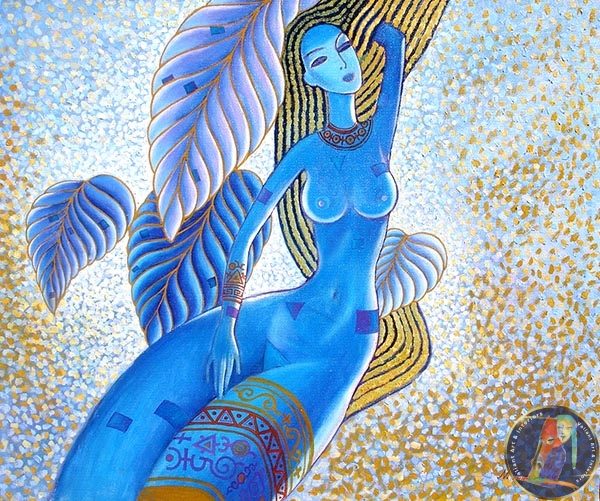
Namriin Haylag 1

Tuya Natsagdorj , 2006 , Oil On Canvas

Namriin Haylag 1 is a mid-sized, horizontally oriented oil-on-canvas painting that embodies Tuya Natsagdorj’s signature synthesis of contemporary international modernism and rich Mongolian cultural symbolism. True to the lyrical nature of its title, the visual narrative centers on a highly stylized, melancholic thematic study of autumn—a profoundly significant season within the nomadic history and consciousness of Mongolia.

The composition prioritizes a soft, figurative abstraction over literal realism. It typically features a central female form, utilized by Natsagdorj as a symbolic totem or goddess of nature. The figure is structured with fluid, elegant contours that mimic the sweeping patterns of the Mongolian steppe and winding topography. Rather than standard portraiture, the anatomy blends into its background, treating the human form as an extension of the seasonal ecosystem.

Color Palette & Atmospheric Depth

The tonal architecture of Namriin Haylag 1 relies heavily on Natsagdorj’s distinct, deeply expressive palette. While the title directly invokes autumn (“Namariin”), the artist subverts traditional autumnal palettes (brilliant oranges and fiery reds) by filtering the composition through atmospheric, cooling shades:

  • Dominant Tones: A rich continuum of deep indigos, slate blues, and muted teals establishes a reflective, twilight-like serenity.

  • Accent Tones: Interwoven accents of soft gold, ochre, and warm earth tones emerge subtly through the cold layers. These represent the drying, golden grasses of the turning season and provide vital visual warmth.

The light source within the canvas is diffuse and non-directional, creating an ethereal, internal luminescence. This choice shifts the viewer’s experience away from a physical landscape and into an emotional, psychological space.

Technique, Brushwork & Stylistic Influence

The paint application reveals a sophisticated cross-continental training. The canvas demonstrates the structural discipline and scenic scale inherited from the artist’s time in Kyiv, combined with the delicate, flat spatial awareness and ornamental clarity refined during her studies in Kyoto.

  • Surface Texture: The oil paint is applied in soft, overlapping glazes, generating a smooth yet rich surface texture.

  • Symbolic Patterning: Flat, decorative linework and ornamental symbols are etched into or painted over the figurative elements. These patterns closely mirror traditional Mongolian embroidery and nomadic motifs, functioning as visual shorthand for legacy, memory, and the circular passage of time.

  • Linear Rhythm: Sweeping, rhythmic brushstrokes guide the eye across the 53 x 63 cm canvas, evoking the continuous movement of wind across the plains or the auditory flow of a melody (“Haylag”).

Conceptual Conclusion

Ultimately, Namriin Haylag 1 acts as a poetic bridge between global figurative movements and indigenous heritage. By utilizing a female silhouette as a symbol for a changing season, Natsagdorj captures the bittersweet, transitional grace of autumn. The artwork reflects a quiet introspection, capturing the shifting of the natural world through a deeply personal, modern lens.
  • Tuya Natsagdorj
  • Ulaanbaatar, Mongolia
  • Abstract, Expressionist, Figurative, Modern/Contemporary, Still Life
  • Oil on canvas
  • TUY49/017
  • 53 x 63cm20" x 24"
  • Valiant Art & Interiors

Add Your Comment

Mongolian Art Gallery © 2025. All Rights Reserved
Privacy Policy / Terms of Use

Namriin Haylag 1 is a mid-sized, horizontally oriented oil-on-canvas painting that embodies Tuya Natsagdorj’s signature synthesis of contemporary international modernism and rich Mongolian cultural symbolism. True to the lyrical nature of its title, the visual narrative centers on a highly stylized, melancholic thematic study of autumn—a profoundly significant season within the nomadic history and consciousness of Mongolia.

The composition prioritizes a soft, figurative abstraction over literal realism. It typically features a central female form, utilized by Natsagdorj as a symbolic totem or goddess of nature. The figure is structured with fluid, elegant contours that mimic the sweeping patterns of the Mongolian steppe and winding topography. Rather than standard portraiture, the anatomy blends into its background, treating the human form as an extension of the seasonal ecosystem.

Color Palette & Atmospheric Depth

The tonal architecture of Namriin Haylag 1 relies heavily on Natsagdorj’s distinct, deeply expressive palette. While the title directly invokes autumn (“Namariin”), the artist subverts traditional autumnal palettes (brilliant oranges and fiery reds) by filtering the composition through atmospheric, cooling shades:

  • Dominant Tones: A rich continuum of deep indigos, slate blues, and muted teals establishes a reflective, twilight-like serenity.

  • Accent Tones: Interwoven accents of soft gold, ochre, and warm earth tones emerge subtly through the cold layers. These represent the drying, golden grasses of the turning season and provide vital visual warmth.

The light source within the canvas is diffuse and non-directional, creating an ethereal, internal luminescence. This choice shifts the viewer’s experience away from a physical landscape and into an emotional, psychological space.

Technique, Brushwork & Stylistic Influence

The paint application reveals a sophisticated cross-continental training. The canvas demonstrates the structural discipline and scenic scale inherited from the artist’s time in Kyiv, combined with the delicate, flat spatial awareness and ornamental clarity refined during her studies in Kyoto.

  • Surface Texture: The oil paint is applied in soft, overlapping glazes, generating a smooth yet rich surface texture.

  • Symbolic Patterning: Flat, decorative linework and ornamental symbols are etched into or painted over the figurative elements. These patterns closely mirror traditional Mongolian embroidery and nomadic motifs, functioning as visual shorthand for legacy, memory, and the circular passage of time.

  • Linear Rhythm: Sweeping, rhythmic brushstrokes guide the eye across the 53 x 63 cm canvas, evoking the continuous movement of wind across the plains or the auditory flow of a melody (“Haylag”).

Conceptual Conclusion

Ultimately, Namriin Haylag 1 acts as a poetic bridge between global figurative movements and indigenous heritage. By utilizing a female silhouette as a symbol for a changing season, Natsagdorj captures the bittersweet, transitional grace of autumn. The artwork reflects a quiet introspection, capturing the shifting of the natural world through a deeply personal, modern lens.