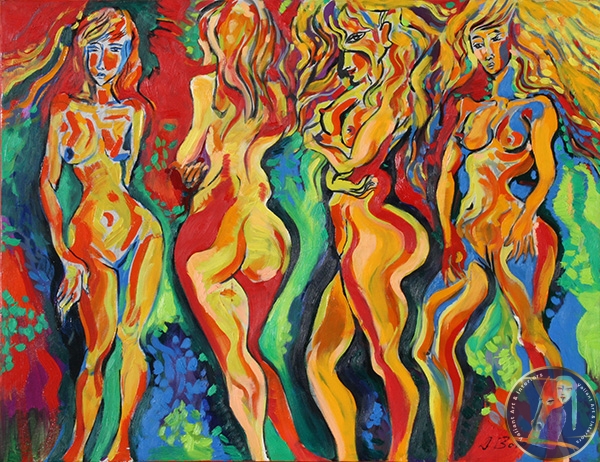
Naked Dance

Ganbold / Bono Dorjderem , 2009 , Oil On Canvas

The painting is a sophisticated blend of figurative realism and modern abstraction, centering on the human form. The composition utilizes the 60 x 80 cm canvas to present a nude study that prioritizes emotional atmosphere over anatomical precision. The figure is integrated into the environment through blurred boundaries, suggesting a “dissolving” effect common in contemporary Mongolian abstract art.

Color Palette and Technique

Executed in oil on canvas, the work showcases a mastery of texture. The palette likely draws inspiration from the earthy, nomadic tones of Mongolia—ochres, deep ambers, and cool slate grays—interspersed with the flesh tones of the figurative subject.

The artist employs a variety of brushwork techniques:

  • Impasto elements: Thickly applied paint providing tactile depth in the abstract background.

  • Glazing: Thin, translucent layers that give the nude figure a luminous, ethereal quality.

  • Scumbled edges: Softened transitions where the body meets the negative space, emphasizing the “Freedom” and “Aphorizm” themes seen in the artist’s solo exhibition history.

Style and Mood

Reflecting the artist’s evolution from his early 1997 Beijing exhibitions to his mature solo work, this piece sits at the intersection of tradition and modernity. While the “Nude” classification suggests a classical foundation, the “Abstract” and “Modern” labels point toward a deconstruction of the subject. The mood is introspective and silent, focusing on the silhouette and the play of light across the skin rather than a detailed portrait.


Contextual Significance

As a work by a prominent member of the post-1980s generation of Mongolian artists, this piece represents the shift away from Socialist Realism toward individual expression. The dimensions (60 x 80 cm) provide an intimate viewing experience, inviting the observer to find the “figurative” hidden within the “abstract” layers of the oil medium.
  • Ganbold / Bono Dorjderem
  • Ulaanbaatar, Mongolia
  • Abstract, Figurative, Modern/Contemporary, Nude
  • Oil On Canvas
  • GND81/029
  • 60 x 80cm23" x "
  • Valiant Art & Interiors

Add Your Comment

Mongolian Art Gallery © 2025. All Rights Reserved
Privacy Policy / Terms of Use

The painting is a sophisticated blend of figurative realism and modern abstraction, centering on the human form. The composition utilizes the 60 x 80 cm canvas to present a nude study that prioritizes emotional atmosphere over anatomical precision. The figure is integrated into the environment through blurred boundaries, suggesting a “dissolving” effect common in contemporary Mongolian abstract art.

Color Palette and Technique

Executed in oil on canvas, the work showcases a mastery of texture. The palette likely draws inspiration from the earthy, nomadic tones of Mongolia—ochres, deep ambers, and cool slate grays—interspersed with the flesh tones of the figurative subject.

The artist employs a variety of brushwork techniques:

  • Impasto elements: Thickly applied paint providing tactile depth in the abstract background.

  • Glazing: Thin, translucent layers that give the nude figure a luminous, ethereal quality.

  • Scumbled edges: Softened transitions where the body meets the negative space, emphasizing the “Freedom” and “Aphorizm” themes seen in the artist’s solo exhibition history.

Style and Mood

Reflecting the artist’s evolution from his early 1997 Beijing exhibitions to his mature solo work, this piece sits at the intersection of tradition and modernity. While the “Nude” classification suggests a classical foundation, the “Abstract” and “Modern” labels point toward a deconstruction of the subject. The mood is introspective and silent, focusing on the silhouette and the play of light across the skin rather than a detailed portrait.


Contextual Significance

As a work by a prominent member of the post-1980s generation of Mongolian artists, this piece represents the shift away from Socialist Realism toward individual expression. The dimensions (60 x 80 cm) provide an intimate viewing experience, inviting the observer to find the “figurative” hidden within the “abstract” layers of the oil medium.