
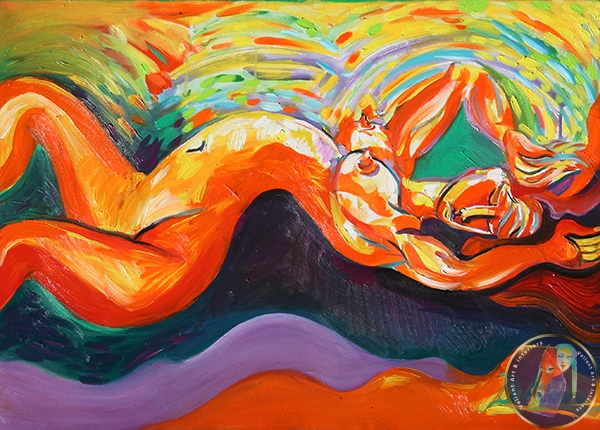
Naked is a compelling synthesis of contemporary figurative art and modern abstraction, showcasing Ganbold Dorjderem’s mastery of the human form through a lens of emotional and textural depth. Painted in oil on a 50 x 70 cm canvas, the work moves away from traditional academic realism, instead favoring a stylistic approach that emphasizes the physical presence and psychological weight of the subject.
Composition and Subject Matter
The painting features a nude figure, rendered with a focus on the interplay between light and shadow. While the title suggests a literal lack of clothing, the “nakedness” of the work is equally interpreted through its raw, unfiltered execution. The figure is positioned to command the central space, utilizing the horizontal orientation of the canvas to create a sense of intimacy and proximity.
The artist employs a figurative style that borders on the abstract; the body is not merely a biological study but a vessel for expression. Contours are defined by bold, confident brushstrokes rather than rigid outlines, allowing the subject to feel integrated into the surrounding environment.
Color Palette and Technique
Ganbold utilizes the rich, tactile qualities of oil paint to create a surface full of movement. The technique reflects the Modern and Abstract influences noted in his broader body of work:
Textural Depth: The application of paint varies from thin, atmospheric glazes to thicker, impasto-like strokes, giving the skin of the subject a living, breathing quality.
Light and Shadow: The artist uses a sophisticated tonal range to sculpt the musculature and form, using light not just for visibility, but to evoke a specific mood—likely one of introspection or quietude.
Stylistic Fusion: There is a clear dialogue between the artist’s Mongolian heritage and international modernism, resulting in a piece that feels both culturally grounded and universally accessible.
Historical Context
Created by an artist who began exhibiting internationally as early as 1997 (Beijing and Shanghai), Naked represents a mature phase of Ganbold’s career. Following his solo exhibitions such as Aphorizm in Art and Freedom (2007), this work continues his exploration of the human condition and the concept of liberty—stripping away the external to reveal the essential self.
Note on Style: This piece serves as a bridge between Ganbold’s early figurative roots and his later leanings toward abstract symbolism, making it a pivotal example of contemporary Mongolian art.