
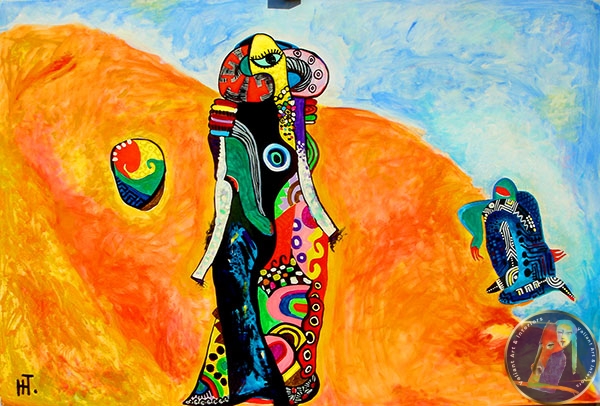
Set against the vast, sweeping backdrop of the Mongolian steppe, Mother is a monumental oil painting that masterfully blends cultural heritage with deep emotional intimacy. The composition is grounded by a strong horizontal axis, emphasizing the immense scale of the landscape, while the central subjects provide a powerful vertical counterpoint.
In the foreground, a revered matriarch sits outside a traditional ger (yurt). Her face is a map of wisdom and resilience, etched with fine lines that capture a lifetime of enduring the harsh, beautiful elements of the high plateau. She is draped in a rich, deeply textured deet—a traditional Mongolian tunic—painted in warm earthy tones of crimson and ochre, which contrasts beautifully with the cool, ethereal blues of the distant mountains.
Subject Matter & Symbolism
The painting is rich with symbolic resonance, exploring the interconnectedness of motherhood, nature, and nomadic tradition:
The Matriarch: Positioned as the anchor of the composition, she represents not just a biological mother, but the keeper of lineage and the spiritual heart of the home. Her gaze is serene yet piercing, directed just past the viewer into the horizon.
The Foal and Mare: Adjacent to the woman, a mare stands protectively over her newborn foal. Given Enkhbat’s celebrated mastery of equestrian subjects, the horses are rendered with exquisite anatomical precision and fluid grace. This dual imagery of human and animal motherhood underscores a shared instinct of nurturing and survival.
The Landscape: The sky occupies the upper third of the canvas, filled with low-hanging, dramatic clouds that catch the golden light of late afternoon. The rolling hills of the steppe fade into a soft atmospheric haze, suggesting the timelessness and infinity of the Mongolian wilderness.
Technique and Color Palette
Enkhbat employs a sophisticated impasto technique, applying the oil paint with deliberate, visible brushstrokes and palette knife work that give the canvas a highly tactile, physical presence. The textures of the woolen textiles, the coarse horsehair, and the dry steppe grass are rendered with palpable realism.
The color palette is anchored in a harmonious duality:
Warm Earth Tones: Siennas, deep reds, and golds dominate the foreground, radiating a sense of maternal warmth, domestic security, and life.
Cool Atmospheric Tones: Pale blues, slate grays, and muted greens define the background, capturing the cool, crisp air of the high altitude and the immense space of the landscape.
Cultural Context
Mother stands as a poignant testament to the nomadic way of life. By juxtaposing the maternal figure with the sweeping landscape and the vital presence of the horse—the ultimate symbol of Mongolian freedom—Enkhbat captures a profound sense of peace, endurance, and sacred continuity.