
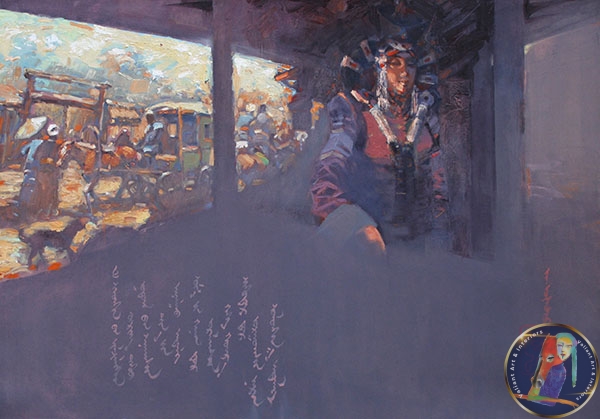
The painting is a striking vertical oil-on-canvas portrait measuring 50 by 70 centimeters, focusing on the regal, stylized figure of a Mongolian queen. Positioned centrally within the frame, the queen is depicted from the mid-torso up, exuding an aura of serene authority, timeless elegance, and profound dignity. The composition seamlessly bridges traditional historical iconography with a sophisticated, contemporary artistic sensibility.
The Face and Expression
The queen’s countenance is the emotional anchor of the piece. Her skin is rendered with smooth, porcelain-like clarity, contrasting gently with the rich textures of her attire.
Features: She possesses delicate, classic East Asian facial features—almond-shaped eyes cast slightly downward or forward with an enigmatic, calm gaze, finely arched eyebrows, and soft, naturally toned lips set in a tranquil expression.
Mood: Her face conveys a quiet strength and introspection, reflecting the historic reverence for Mongolian noblewomen who held significant political, spiritual, and familial power.
Costume and Traditional Attire
The intricate detailing of her traditional garments, known as a deel, and her elaborate ceremonial armor-like vestments form a centerpiece of the visual narrative.
The Gown: She wears a high-collared, richly embroidered robe. The fabric features subtle, woven geometric patterns or traditional Mongolian cloud and endless knot (ulzii) motifs that catch the light, suggesting heavy silk or brocade.
The Vest: Over the robe rests a structured, ornate vestment decorated with metallic gold filigree, tribal patterns, and inlaid medallions. The textures are deeply layered, showcasing the artist’s mastery over oil paint to replicate the weight of heavy fabric, leather, and metal work.
The Headdress and Jewelry
The most visually arresting element is the majestic, towering headdress (khantor), characteristic of Khalkha Mongolian nobility.
Structure: The headdress frames her face with two sweeping, curved wings reminiscent of a mythical bird or the horns of a wild argali sheep, symbolizing grace and untamed power. These side-wings are intricately decorated with silver or gold plating, embossed with delicate traditional stampings.
Embellishments: Cascading down from the headdress and framing her cheeks are long, elaborate strands of coral, turquoise, and pearl beads interspersed with silver spacers. These heavy ornaments hang gracefully, resting against her shoulders and chest. A central forehead ornament, featuring a prominent polished gemstone, rests just beneath the crown of the headdress.
Color Palette and Light
The color scheme is sophisticated, balancing rich, earth-toned heritage colors with vivid, regal highlights.
Primary Tones: Deep crimson, burnt amber, and rich ochre form the structural weight of her attire, giving the painting a warm, grounded energy.
Accents: Luminous gold leaf or metallic yellow paint accents the filigree of her jewelry and armor. Vivid turquoise blues and coral reds puncture the palette, drawing focus to the meticulous beadwork of her jewelry.
Light Play: The lighting is soft and deliberate, originating from a gentle, directional source that highlights the curve of her cheek, the bridge of her nose, and the reflective surfaces of her metallic ornaments, leaving deep, velvety shadows in the folds of her garments.
Background and Style
The Background: In contrast to the highly detailed figure, the background is kept minimalist, atmospheric, and abstract. It features fluid, textured brushstrokes and blended gradients of muted grays, soft charcoal, and deep sienna. This deliberate simplicity ensures that the viewer’s eye remains locked on the queen, while giving the impression of an ethereal, timeless void or the expansive, mist-shrouded steppes of Mongolia.
Artistic Style: The painting reflects Usukhbayar Zagd’s academic training in Ulaanbaatar and Ukraine, blending strict European figurative structure with Mongolian avant-garde and traditional decorative art. The lines are precise, yet the overall execution possesses a soft, poetic fluidity, perfectly encapsulating the hybrid identity of contemporary Mongolian fine art.