
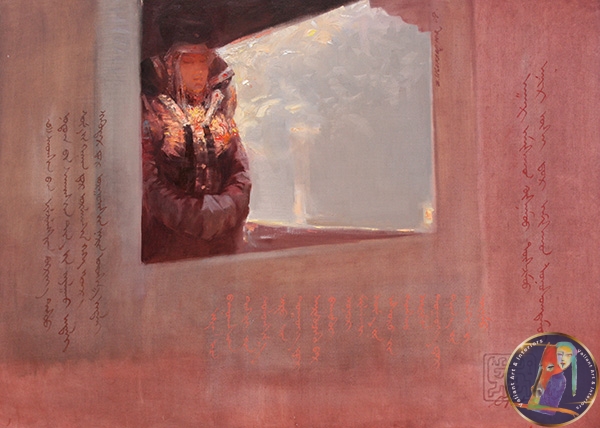
The painting “Mongolian Queen 2” by the contemporary Mongolian artist Usukhbayar Zagd is a striking oil on canvas piece measuring 50 by 70 centimeters (Accession Number: USU75/002).
This artwork presents a rich, textured portrait of a noble Mongolian historical figure, balancing traditional cultural iconography with a bold, modern expressionist style. The composition focuses heavily on the intricate details of royal costume, status, and identity.
Subject and Composition
The central focal point of the artwork is a single, regal female figure depicted from the chest up. She is presented in a stately, symmetrical posture that immediately commands respect and evokes the quiet authority of Mongolian queens (Khatuns).
The composition is closely cropped around her face and her highly elaborate, traditional headdress. This headdress mimics the sweeping, dramatic shape of a Khalkha Mongolian married woman’s coiffure—traditionally styled to resemble the wings of a mythical bird or the horns of a wild Argali sheep, symbolizing freedom, grace, and strength.
Wardrobe and Traditional Elements
The painting meticulously highlights the elements of historical Mongolian court attire:
The Headdress: The sprawling structural wings of her hair or headpiece are adorned with delicate patterns suggesting embedded silver filigree, coral, and turquoise beads. Long, decorative hair tresses or silver pendants drape down beside her face, framing her features with cascading textures.
The Deel: She wears a traditional high-collared gown (deel) crafted with broad, layered shoulders. The fabric of the garment features subtle, rich patterns that hint at heavy silk brocade, accented with gold or contrasting trim along the collar and chest.
Color Palette and Texture
Usukhbayar Zagd utilizes a sophisticated and emotionally charged color palette. Rather than relying entirely on strict realism, the artist uses layered, expressive tones to establish mood:
Background and Atmosphere: The backdrop is rendered in deep, atmospheric shades—deep crimson, muted earths, or dark midnight tones—which isolate the queen and make her figure glow outward.
Flesh and Fabric Tones: The skin of the queen is painted with soft, luminous highlights, contrasting sharply with the deep, saturated blues, golds, and reds of her royal attire.
Brushwork: The oil paint is applied with visible, confident strokes, combining smooth blending on her face with heavy, textured, almost impasto applications on the jewelry and clothing. This blend of textures gives the canvas a physical, tactile quality, making the ancient stones and heavy fabrics feel alive.
Mood and Interpretation
The overall mood of “Mongolian Queen 2” is one of timeless dignity and introspection. The queen’s expression is serene, enigmatic, and distant, gazing past the viewer into the horizon. By isolating her against a minimalist, evocative background, Zagd strips away the noise of a specific historical setting, transforming the queen from a mere historical portrait into a powerful, universal symbol of Mongolian heritage, maternal strength, and enduring cultural pride.