

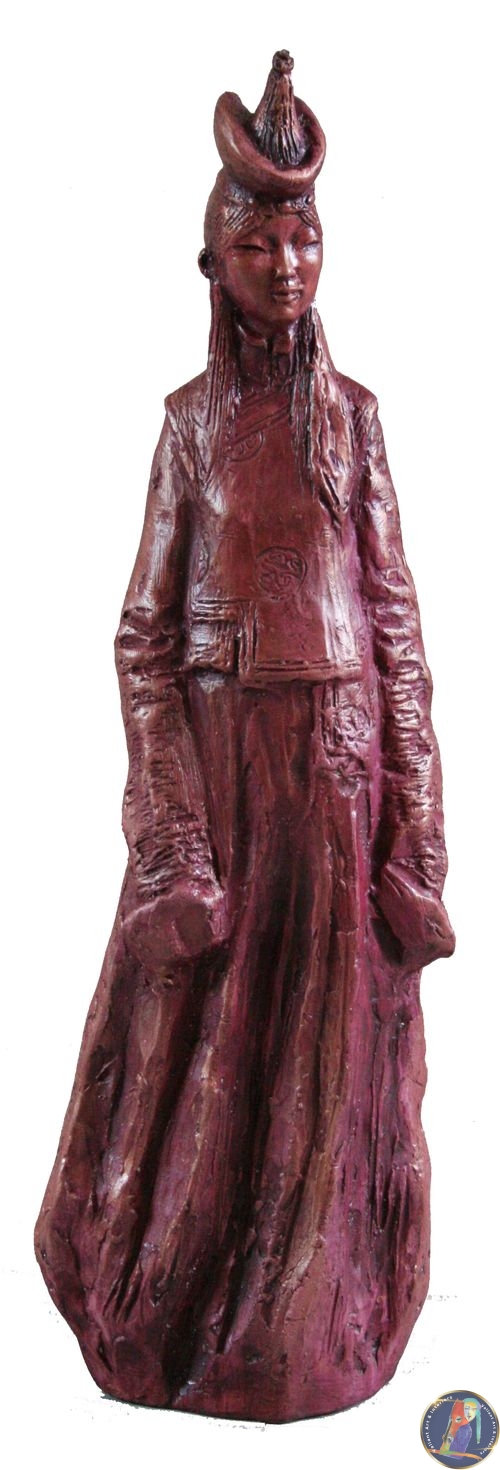
Mongolian Lady 2 is a contemporary ceramic sculpture that merges traditional Mongolian identity with a refined, modernist aesthetic. Standing at nearly half a meter tall, the piece is characterized by its elongated proportions and graceful verticality, a hallmark of Narankhuu’s sculptural style.
The Figure and Form
The sculpture depicts a woman in a stylized pose that emphasizes poise and cultural heritage. The artist utilizes the ceramic medium to create smooth, flowing lines, particularly in the silhouette of the traditional Mongolian deel (tunic). The form is minimalist yet expressive, focusing on the essence of the subject rather than anatomical hyper-realism.
Traditional Details
Central to the work’s identity is the intricate rendering of the headdress. Drawing inspiration from the elaborate hair ornaments and hats worn by Khalkha Mongolian women, the sculpture features wide, wing-like extensions. These structural elements give the piece a sense of weight and importance, contrasting with the slender, tapered lines of the body.
Texture and Finish
The 2008 piece showcases Narankhuu’s mastery over ceramic surfaces. The finish often incorporates a blend of earthy glazes and polished textures, reflecting the natural landscapes of Mongolia. There is a tactile quality to the work, where the hardness of the fired clay is manipulated to mimic the soft drape of fabric and the delicate features of the face.
Artistic Context
Born in Ulaanbaatar in 1982, Sukhburen Narankhuu represents a generation of Mongolian artists who reinterpret nomadic traditions through a professional, academic lens.
Style: His work is noted for its “Neo-Nomadic” sensibility—preserving the spirit of the steppe while utilizing the clean, geometric languages of modern sculpture.
Symbolism: In Mongolian Lady 2, the woman is not merely a portrait but a symbol of the enduring strength and elegance of Mongolian culture. The height of the piece (48 cm) allows it to command a presence, functioning as a bridge between ancient folklore and 21st-century fine art.