
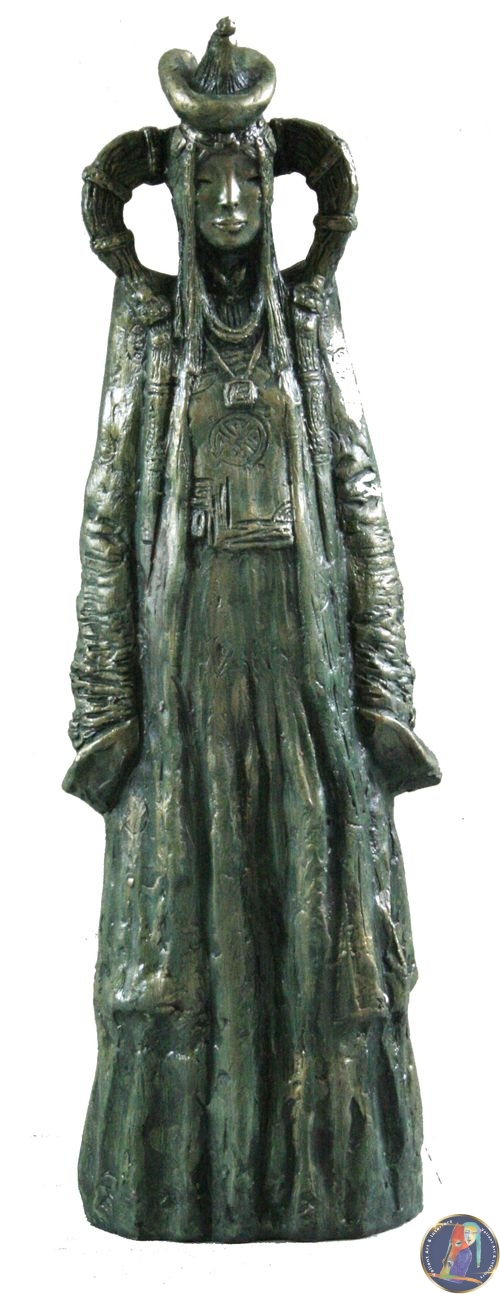
This striking ceramic sculpture, standing at 48cm, is a profound exploration of Mongolian identity through the lens of contemporary sculpture. Created in 2008, Mongolian Lady 1 captures a synthesis of traditional nomadic aesthetics and modern artistic expression.
Form and Composition
The sculpture features a stylized female figure that emphasizes verticality and grace. Narankhuu utilizes the medium of ceramic to create a texture that feels both ancient and refined. The “Lady” is depicted with an elongated silhouette, a common hallmark of Narankhuu’s work, which lends the piece an air of nobility and timelessness.
Cultural Symbolism
While the figure is abstracted, it remains deeply rooted in the artist’s heritage:
The Headdress: The sculpture subtly integrates elements of the Khalkha female attire. The upper portion of the piece mimics the architectural complexity of traditional Mongolian hair ornaments and hats, which historically symbolized a woman’s status and the wings of a mythical bird.
The Garment: The body of the sculpture flows downward like a traditional deel (the national tunic), though Narankhuu strips away the surface-level patterns of embroidery to focus on the purity of the form and the interplay of light on the ceramic surface.
Artistic Style
As a sculptor born and raised in Ulaanbaatar, Narankhuu belongs to a generation of Mongolian artists who bridge the gap between the socialist realism of their predecessors and a new, globalized abstraction. In Mongolian Lady 1, we see:
Minimalism: The facial features are often understated or smoothed over, inviting the viewer to focus on the emotional resonance of the posture rather than a specific likeness.
Tactile Quality: The choice of ceramic provides an earthy, grounded feel, contrasting with the ethereal, elongated proportions of the figure.
About the Artist
Sukhburen Narankhuu (b. 1982) is a prominent figure in the contemporary Mongolian art scene. His work is characterized by a “silent strength”—a way of representing the Mongolian spirit through still, evocative forms. Having matured in the post-1990 transition period of Mongolia, his sculptures like Mongolian Lady 1 reflect a search for cultural roots within a rapidly changing modern world.