
The Unique Selling Proposition: The Soul of the Steppe
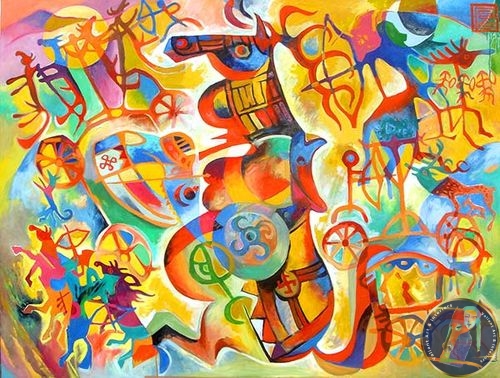
Mongolia (2005) is a definitive masterwork that serves as a visual manifesto for the Abstract Geometric Minimalist movement in Central Asia. In this expansive composition, Magvaandorj Oidov transcends the literal geography of his homeland to capture its elemental spirit. This is not a landscape of grass and sky, but a landscape of the mind—distilled into the fundamental geometry that defines the Mongolian identity.
The USP of this work lies in its monumental scale and atmospheric clarity. Measuring a significant 120cm x 160cm, the painting possesses an inherent architectural weight, making it a perfect centerpiece for grand, open-plan interiors. It offers a “light and aesthetic” alternative to traditional representational art, replacing busy details with a sophisticated arrangement of shapes that mirror the rhythmic harmony of the nomadic horizon.
For the serious collector, Mongolia represents:
-
Abstract Heritage: A rare ability to translate thousands of years of cultural history into a clean, contemporary language that complements European-inspired minimalist decor.
-
Spatial Sophistication: The deliberate use of oil on canvas provides a rich, matte texture that absorbs and reflects gallery lighting with subtle grace, creating a sense of calm and expansive volume in any room.
-
Balanced Modernism: It provides an intellectual anchor for a space, offering a narrative of vastness and freedom without the visual clutter, ensuring the environment remains airy, focused, and profoundly elegant.
About the Artist
Magvaandorj Oidov is a visionary contemporary artist hailing from Uvs Aimag, Mongolia. His work is characterized by a transition from the traditional toward a globalized language of abstraction, where he explores the intersection of nature and geometry. By utilizing the tactile richness of oil on canvas, Oidov strips away the ornamental to reveal the core essence of his subjects—be they historical, personal, or geographical. He is widely recognized for his precision and his unique ability to evoke the silent, powerful spirit of the Mongolian landscape through the refined lens of modern minimalism.