
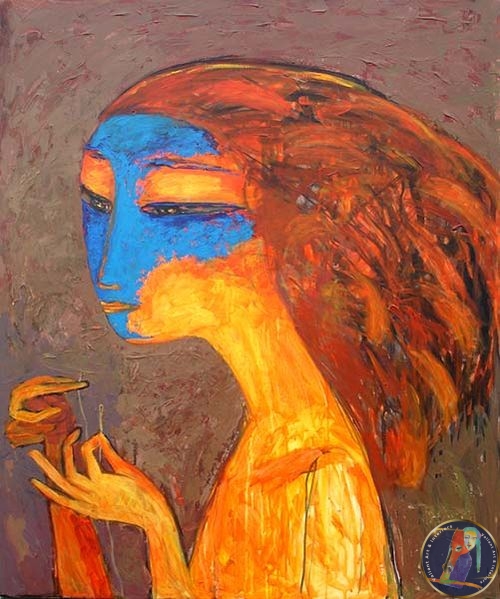
In this 2006 work, Munkhtsetseg Jalkhaajav—one of Mongolia’s most prominent contemporary voices—bridges the gap between ancient spiritual traditions and modern abstract sensibilities. The painting serves as a visceral exploration of the female form, identity, and the deep-seated connection between the Mongolian landscape and the human soul.
Composition and Subject Matter
The piece features a central figure, rendered in Mugi’s signature Contemporary Figurative style. Typical of her work from this period, the figure likely appears in a state of transformation or introspection. The 100 x 80 cm vertical canvas provides an intimate yet commanding space for a singular, often elongated form that echoes the traditional aesthetics of Mongolian Buddhist iconography, reimagined through a lens of 21st-century existentialism.
The Body as Landscape: The artist often treats the human anatomy as an architectural or geographical site. In Mongolia, the skin and clothing of the subject may be textured with symbols or patterns that evoke the vast, weathered plains of the steppe.
Symbolism: True to her education in both Ulaanbaatar and Minsk, Mugi blends the technical rigor of Russian Academicism with the symbolic depth of nomadic folklore. You may observe “internal” elements—such as organs or birds—depicted outside or atop the body, representing the healing rituals and the concept of the “soul-container” prevalent in Mongolian Shamanism.
Color Palette and Technique
The use of oil paint in this work is both delicate and bold. The palette likely favors:
Earth Tones: Ochre, deep siennas, and dusty umbers that ground the piece in the Mongolian soil.
Spiritual Accents: Sharp contrasts of ritualistic crimson or ethereal blues, used to highlight the “life force” or spiritual energy points of the figure.
Texture: The surface is characterized by layers of glazing and scratching, a technique that suggests the passage of time and the peeling away of layers to reveal a hidden truth.