
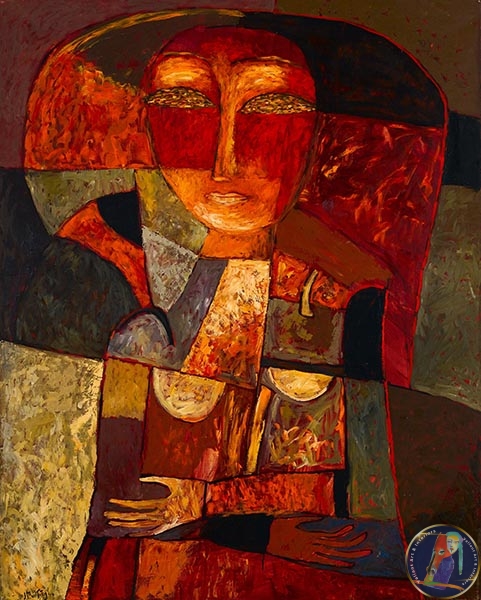
Mixture is a compelling large-scale oil painting that exemplifies Munkhtsetseg Jalkhaajav’s mastery in blending contemporary figurative elements with a haunting abstract modern sensibility. Measuring 150 by 120 cm, the vertical composition dominates the viewer’s field of vision, creating an immersive space where the physical and spiritual realms seem to blur.
Composition and Style
Reflecting the artist’s rigorous academic training in both Ulaanbaatar and Minsk, the piece displays a sophisticated command of anatomical form, though it intentionally deconstructs these forms to explore deeper psychological truths.
The Figurative Element: Central to the work is the human form—often a recurring motif in Jalkhaajav’s “Mugi” series—rendered with a mix of delicate precision and raw, expressive brushwork. The “mixture” referenced in the title manifests in the way the body interacts with its environment, suggesting a synthesis of internal organs, external skin, and ethereal energy.
The Abstract Atmosphere: The background is not a literal space but a textured, atmospheric void. Layers of oil paint are applied with varying degrees of transparency, creating a sense of depth that feels both subterranean and celestial.
Color Palette and Texture
The palette of Mixture is likely grounded in the earthy, organic tones characteristic of the artist’s mid-2000s period.
Tonal Harmony: Expect a dialogue between muted ochres, deep umbers, and fleshy pinks, punctuated by starker contrasts of black or crimson.
Surface Quality: The canvas bears the marks of a physical process; the oil paint is manipulated to create surfaces that mimic skin, bandages, or ancient parchment. This tactile quality emphasizes the artist’s preoccupation with the “healing” nature of art and the vulnerability of the body.
Symbolic Context
Created in 2006, this work sits at a pivotal point in Jalkhaajav’s career, following her international exposure in Germany, Japan, and Korea. Mixture serves as a meditation on:
Identity: The merging of traditional Mongolian roots with the avant-garde influences of her Russian education.
Duality: The “mixture” of the seen and the unseen, the healthy and the wounded, and the permanent and the ephemeral.
Femininity: As a prominent figure in the Mongolian women’s art movement, Jalkhaajav uses the canvas to explore the complexities of the female experience, often portraying the body as a vessel of both pain and profound creative power.