
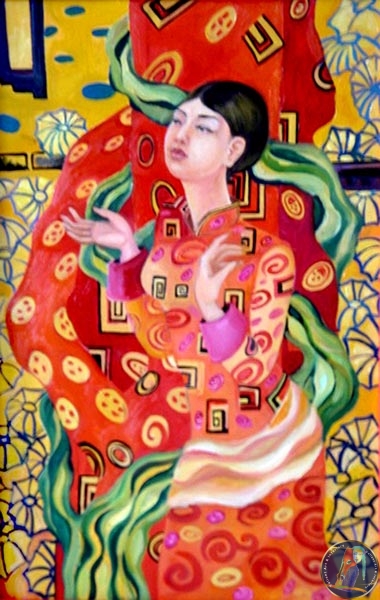
In this evocative work, Munkhtsetseg Bavuudorj utilizes a sophisticated blend of Figurative Expressionism and Abstract sensibilities to explore the visceral nature of human connection. The 40 x 60 cm canvas serves as an intimate stage for a composition that prioritizes emotional resonance over literal representation, a hallmark of her 2005 period.
The application of oil paint is characterized by textured, layered brushwork that suggests both the delicacy and the weight of the subject matter. The artist’s Mongolian heritage subtly informs the aesthetic, blending traditional spiritual undertones with a modern, master-degree-refined technical approach.
Key Elements
The Subject: The painting likely centers on stylized human forms—often a recurring motif in Bavuudorj’s work—rendered with fluid, flowing lines that blur the boundaries between individual bodies.
Color Palette: Expect a deliberate use of symbolic color. Bavuudorj often employs deep, earthy tones contrasted with ethereal washes of crimson or ochre to signify the “life force” or “blood” of shared affection.
Symbolism: True to her style, the concept of “Love” is not depicted as a static pose, but as an energetic exchange. The figures may appear anatomical yet translucent, suggesting that love is a state of being that transcends the physical shell.
Artistic Context
Created while Bavuudorj was serving as the Head of the Classical Art Department at the Institute of Fine Art, Love represents a mature intersection of her academic rigor and her personal expressive journey. The painting departs from the rigid structures of classical training, leaning instead into the Abstract Expressionist movement to capture the intangible “feeling” of the title.