Image

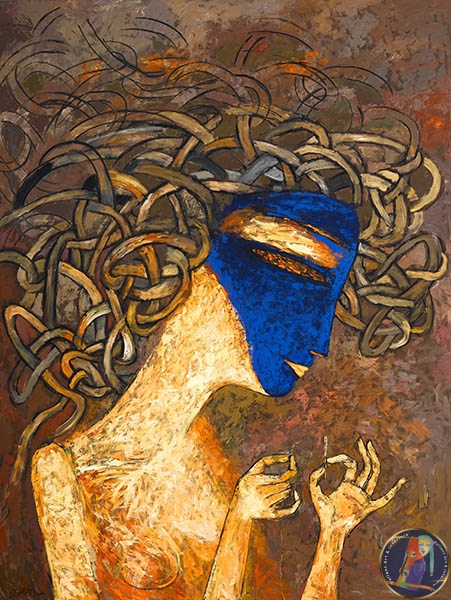
Munkhtsetseg Jalkhaajav , 2005 , Oil On Canvas

Created in 2005, Image is a commanding example of Munkhtsetseg Jalkhaajav’s signature blend of Contemporary Figurative art and Abstract Modernism. Standing at two meters tall, the large-scale canvas dominates the viewer’s field of vision, utilizing the expansive space to explore themes of femininity, internal anatomy, and the metaphysical spirit.

Composition and Form

The painting features a centralized, stylized female figure that bridges the gap between the physical and the symbolic. Jalkhaajav moves away from literal realism, instead employing a semi-abstracted silhouette that feels both ancient and modern.

  • The Silhouette: The figure is often rendered with elongated limbs or a simplified torso, emphasizing a sense of monumental stillness.

  • Internal Landscape: Characteristic of her work during this period, the “image” likely delves into the interiority of the body. She frequently portrays organs—specifically the heart, lungs, or uterus—not as clinical specimens, but as vibrant, pulsing symbols of life and trauma.

  • Negative Space: The 200 x 150 cm canvas provides a vast background that isolates the central figure, creating a vacuum-like environment that heightens the emotional intensity and focuses the viewer entirely on the “inner self” of the subject.

Color Palette and Texture

Jalkhaajav’s Russian training in Minsk is evident in her sophisticated mastery of oil techniques, yet her palette remains deeply rooted in Mongolian aesthetics.

  • Primary Tones: The work typically utilizes a rich, earthy base—deep ochres, muted reds, and bruised purples—contrasted against ethereal washes of grey or stark whites.

  • The Use of Red: In Image, red acts as a visceral focal point, representing blood, vitality, and the biological essence of the female experience.

  • Surface Quality: The oil paint is applied with a mix of delicate glazes and more aggressive, textured brushwork, suggesting a layering of memories or the “skins” of the soul.
  • Munkhtsetseg Jalkhaajav
  • Abstract, Calligraphy, Expressionist
  • Oil On Canvas
  • MUK37/022
  • 200 x 150cm
  • Mongolian Art Gallery

Add Your Comment

Mongolian Art Gallery © 2025. All Rights Reserved
Privacy Policy / Terms of Use

Created in 2005, Image is a commanding example of Munkhtsetseg Jalkhaajav’s signature blend of Contemporary Figurative art and Abstract Modernism. Standing at two meters tall, the large-scale canvas dominates the viewer’s field of vision, utilizing the expansive space to explore themes of femininity, internal anatomy, and the metaphysical spirit.

Composition and Form

The painting features a centralized, stylized female figure that bridges the gap between the physical and the symbolic. Jalkhaajav moves away from literal realism, instead employing a semi-abstracted silhouette that feels both ancient and modern.

  • The Silhouette: The figure is often rendered with elongated limbs or a simplified torso, emphasizing a sense of monumental stillness.

  • Internal Landscape: Characteristic of her work during this period, the “image” likely delves into the interiority of the body. She frequently portrays organs—specifically the heart, lungs, or uterus—not as clinical specimens, but as vibrant, pulsing symbols of life and trauma.

  • Negative Space: The 200 x 150 cm canvas provides a vast background that isolates the central figure, creating a vacuum-like environment that heightens the emotional intensity and focuses the viewer entirely on the “inner self” of the subject.

Color Palette and Texture

Jalkhaajav’s Russian training in Minsk is evident in her sophisticated mastery of oil techniques, yet her palette remains deeply rooted in Mongolian aesthetics.

  • Primary Tones: The work typically utilizes a rich, earthy base—deep ochres, muted reds, and bruised purples—contrasted against ethereal washes of grey or stark whites.

  • The Use of Red: In Image, red acts as a visceral focal point, representing blood, vitality, and the biological essence of the female experience.

  • Surface Quality: The oil paint is applied with a mix of delicate glazes and more aggressive, textured brushwork, suggesting a layering of memories or the “skins” of the soul.