
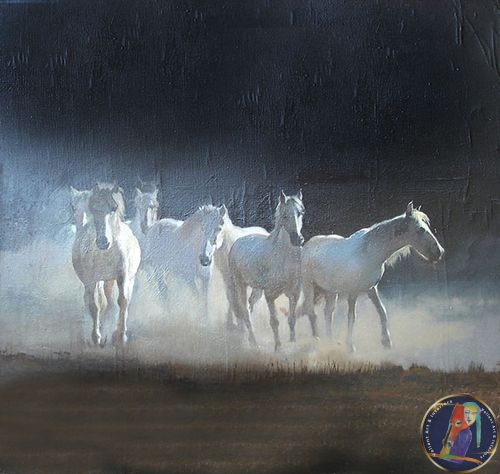
This piece by Narantsetseg Dorj is a compelling intersection of Expressionism and Minimalism. While these two styles often sit at opposite ends of the spectrum—Expressionism being emotive and busy, Minimalism being restrained and quiet—Dorj finds a unique harmony between them.
Minimalist Structure: The composition is likely defined by a “less is more” philosophy. By utilizing a nearly square canvas (42.5 x 40 cm), the artist creates a sense of stability and focus, stripping away unnecessary environmental details to highlight a singular theme or emotion.
Expressionist Soul: Despite the minimalist layout, the application of oil paint is handled with an expressive touch. Expect to see visible, gestural brushstrokes that convey the artist’s internal state, transforming a simple subject into a vessel for raw feeling.
Visual Character
Spatial Balance: In the spirit of Minimalism, the artist utilizes negative space effectively, allowing the eye to rest and giving the central subject—whether it be a figure, a landscape element, or an abstract form—room to breathe.
Texture and Depth: The use of oil allows for a rich, tactile surface. The “expressionist” element suggests that the paint is not just a colorant but a structural component of the work, with impasto or layered glazes adding physical depth to the small-scale canvas.
Interpretive Context
Narantsetseg Dorj’s work often reflects a modern Mongolian sensibility, where traditional vastness is distilled into contemporary shorthand. The small dimensions of this specific piece suggest an intimate viewing experience, inviting the observer to step close and engage with the subtle nuances of the brushwork and the deliberate economy of the composition.
As part of the Mongolian Art Gallery collection, this work serves as a prime example of how contemporary Mongolian artists are moving away from literal representation toward a more psychological and essentialist form of storytelling.