Horse Racing 2

Enkhtaivan Ochirbat , 2010 , Oil On Canvas

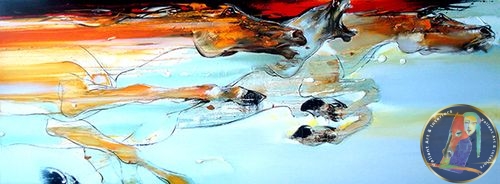
Horse Racing 2 is a panoramic oil painting that captures the raw, kinetic energy of a traditional Mongolian horse race. Measuring an expansive 50 x 120cm, the elongated canvas mimics the wide-open horizons of the Mongolian steppe, allowing the viewer to feel the lateral momentum of the subjects as they thunder across the landscape.

The work sits at a sophisticated intersection of Contemporary Figurative art and Expressionism. Rather than focusing on photographic realism, Ochirbat utilizes bold, gestural brushwork to emphasize movement and spirit. The horses and their young riders are rendered with fluid, sweeping strokes that blur the lines between the figures and the dust kicked up from the earth.


Style and Technique

Reflecting Ochirbat’s background and his education at the Art Institute (1993-1998), the painting showcases a masterful use of the Expressionist style:

  • The Palette: The colors are likely earthy yet vibrant, reflecting the natural tones of the steppe—ochres, deep browns, and dusty tans—punctuated by the bright, symbolic silks of the child jockeys.

  • Movement: The artist employs a “speed-blur” technique. The legs of the horses are often abstracted into rhythmic lines, suggesting a pace that the human eye can barely catch.

  • Texture: As an oil on canvas piece, the impasto (thick application of paint) adds a tactile dimension. The physical build-up of paint mirrors the rugged terrain and the physical intensity of the Naadam festival races.


Cultural Context

Born in Ulaanbaatar in 1977, Ochirbat draws deeply from his Mongolian heritage. This piece, created during his long-standing tenure as an art teacher at the “Industry and Art” school, serves as a bridge between traditional nomadic culture and modern abstract techniques.

The painting does not just depict a sport; it depicts the “Wind Horse” (Hiimori), a central concept in Mongolian cosmology representing inner strength and spiritual energy. By choosing an elongated format, Ochirbat honors the vastness of the land that has shaped the Mongolian identity for centuries.
  • Enkhtaivan Ochirbat
  • Abstract, Expressionist
  • Oil On Canvas
  • ENT21/059
  • 50 x 120cm
  • Mongolian Art Gallery

Add Your Comment

Mongolian Art Gallery © 2025. All Rights Reserved
Privacy Policy / Terms of Use

Horse Racing 2 is a panoramic oil painting that captures the raw, kinetic energy of a traditional Mongolian horse race. Measuring an expansive 50 x 120cm, the elongated canvas mimics the wide-open horizons of the Mongolian steppe, allowing the viewer to feel the lateral momentum of the subjects as they thunder across the landscape.

The work sits at a sophisticated intersection of Contemporary Figurative art and Expressionism. Rather than focusing on photographic realism, Ochirbat utilizes bold, gestural brushwork to emphasize movement and spirit. The horses and their young riders are rendered with fluid, sweeping strokes that blur the lines between the figures and the dust kicked up from the earth.


Style and Technique

Reflecting Ochirbat’s background and his education at the Art Institute (1993-1998), the painting showcases a masterful use of the Expressionist style:

  • The Palette: The colors are likely earthy yet vibrant, reflecting the natural tones of the steppe—ochres, deep browns, and dusty tans—punctuated by the bright, symbolic silks of the child jockeys.

  • Movement: The artist employs a “speed-blur” technique. The legs of the horses are often abstracted into rhythmic lines, suggesting a pace that the human eye can barely catch.

  • Texture: As an oil on canvas piece, the impasto (thick application of paint) adds a tactile dimension. The physical build-up of paint mirrors the rugged terrain and the physical intensity of the Naadam festival races.


Cultural Context

Born in Ulaanbaatar in 1977, Ochirbat draws deeply from his Mongolian heritage. This piece, created during his long-standing tenure as an art teacher at the “Industry and Art” school, serves as a bridge between traditional nomadic culture and modern abstract techniques.

The painting does not just depict a sport; it depicts the “Wind Horse” (Hiimori), a central concept in Mongolian cosmology representing inner strength and spiritual energy. By choosing an elongated format, Ochirbat honors the vastness of the land that has shaped the Mongolian identity for centuries.