
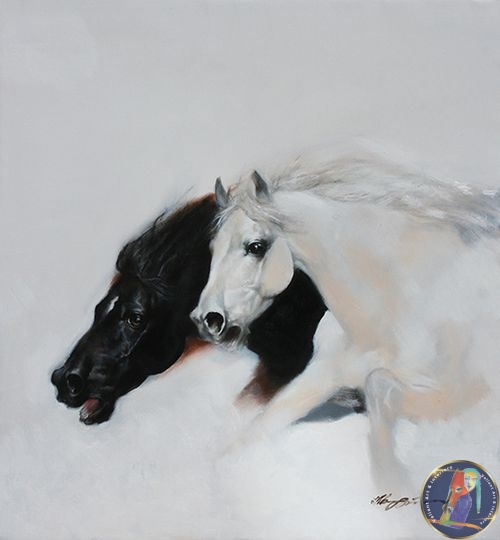
Horse Race 1 is a dynamic exploration of movement and Mongolian heritage, captured through Munkhbat Naranpeljee’s signature fusion of semi-abstract forms and vibrant color palettes. Measuring 65 x 65 cm, the square format focuses the viewer’s attention on the intense, kinetic energy of the gallop.
The painting depicts a group of horses and riders mid-race, rendered with fluid, sweeping brushstrokes that prioritize the feeling of speed over anatomical precision. Naranpeljee utilizes a rich, earthy color scheme—deep ochres, siennas, and burnt oranges—juxtaposed against flashes of brilliant turquoise or crimson in the riders’ traditional attire. This creates a visual rhythm that mimics the thundering heartbeat of a high-stakes competition.
Technique and Atmosphere
Textural Depth: The oil paint is applied with varied thickness; thin, atmospheric washes create a sense of dust and kicked-up earth, while impasto highlights on the horses’ manes and flanks add a physical dimension to the power of the animals.
Motion Blur: The artist employs “motion lines” and blurred edges, blending the figures into the background to suggest that the scene is moving too fast for the eye to fully catch.
Cultural Essence: While contemporary in execution, the work is deeply rooted in the Mongolian “Naadam” tradition, reflecting the spiritual and historical bond between the Mongolian people and their horses.
Historical Significance & Provenance
Created in 2010, this piece represents a pivotal moment in Naranpeljee’s international career, serving as a primary ambassador for Mongolian contemporary art on the global stage. Its exhibition history reflects its universal appeal across three continents in a single year:
Art Monaco 2010: Debuted at the prestigious Grimaldi Forum, Monaco, where it was introduced to the Mediterranean elite and European collectors.
Art Shopping (Paris): Exhibited at the Carrousel du Louvre, placing the work within the literal heart of the French art world.
International Equestrian Festival 2010: Shown in Lexington, Kentucky (the “Horse Capital of the World”), where it was celebrated by equestrian experts for its authentic portrayal of equine power.
This painting stands as a testament to Naranpeljee’s ability to translate the ancient, thundering tradition of the steppe into a modern, sophisticated visual language that resonates globally.