Horse Composition 2

Enkhtaivan Ochirbat , 2009 , Oil On Canvas

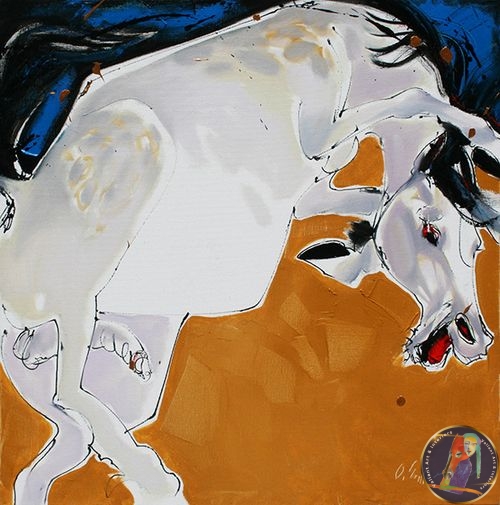
Horse Composition 2 is a masterful intersection of Mongolian nomadic heritage and contemporary abstraction. Measuring 70 x 70cm, the square format of the canvas provides a balanced, rhythmic stage for Ochirbat’s expressive exploration of the horse—a central motif in his cultural identity.

Composition and Form

The painting moves away from literal representation, leaning heavily into the Abstract Modern and Expressionist styles. Rather than a singular, anatomical study of a horse, the work presents a fluid “composition” of equine energy.

  • Dynamic Lines: Strong, sweeping brushstrokes suggest the arch of a neck, the curve of a flank, and the motion of a gallop. These lines overlap and intersect, creating a sense of multiple horses merging into one another.

  • Layered Space: The artist utilizes a shallow depth of field. The figures are not set against a traditional horizon line; instead, they emerge from a textured, atmospheric background that blurs the distinction between the animals and the landscape.

Color Palette and Texture

True to the Contemporary Figurative style, the color work is both emotive and sophisticated:

  • Earth Tones and Vibrancy: The palette likely balances the organic ochres, umbers, and siennas of the Mongolian steppe with sudden, bold applications of color—perhaps deep crimsons or cool blues—that highlight the emotional intensity of the scene.

  • Oil Technique: As an oil on canvas piece, the texture is tactile. Ochirbat uses varied paint applications, from thin, translucent glazes that allow the underlying layers to breathe, to thick, impasto strokes that give the “composition” physical weight and momentum.

Artistic Mood

The work reflects Ochirbat’s transition from his formal education (1993-1998) into his established voice as a teacher and professional artist. It captures the spirit of the “Action” exhibition series he participated in during the early 2000s. The mood is not one of stillness, but of vitality and spiritual resonance. The horses are not mere subjects; they are symbols of freedom and the fluid nature of time and memory.
  • Enkhtaivan Ochirbat
  • Expressionist, Mongolian Style
  • Oil On Canvas
  • ENT21/056
  • 70 x 70cm
  • Mongolian Art Gallery

Add Your Comment

Mongolian Art Gallery © 2025. All Rights Reserved
Privacy Policy / Terms of Use

Horse Composition 2 is a masterful intersection of Mongolian nomadic heritage and contemporary abstraction. Measuring 70 x 70cm, the square format of the canvas provides a balanced, rhythmic stage for Ochirbat’s expressive exploration of the horse—a central motif in his cultural identity.

Composition and Form

The painting moves away from literal representation, leaning heavily into the Abstract Modern and Expressionist styles. Rather than a singular, anatomical study of a horse, the work presents a fluid “composition” of equine energy.

  • Dynamic Lines: Strong, sweeping brushstrokes suggest the arch of a neck, the curve of a flank, and the motion of a gallop. These lines overlap and intersect, creating a sense of multiple horses merging into one another.

  • Layered Space: The artist utilizes a shallow depth of field. The figures are not set against a traditional horizon line; instead, they emerge from a textured, atmospheric background that blurs the distinction between the animals and the landscape.

Color Palette and Texture

True to the Contemporary Figurative style, the color work is both emotive and sophisticated:

  • Earth Tones and Vibrancy: The palette likely balances the organic ochres, umbers, and siennas of the Mongolian steppe with sudden, bold applications of color—perhaps deep crimsons or cool blues—that highlight the emotional intensity of the scene.

  • Oil Technique: As an oil on canvas piece, the texture is tactile. Ochirbat uses varied paint applications, from thin, translucent glazes that allow the underlying layers to breathe, to thick, impasto strokes that give the “composition” physical weight and momentum.

Artistic Mood

The work reflects Ochirbat’s transition from his formal education (1993-1998) into his established voice as a teacher and professional artist. It captures the spirit of the “Action” exhibition series he participated in during the early 2000s. The mood is not one of stillness, but of vitality and spiritual resonance. The horses are not mere subjects; they are symbols of freedom and the fluid nature of time and memory.