Horse Composition

Undram Enkhbold , 2009 , Oil On Canvas

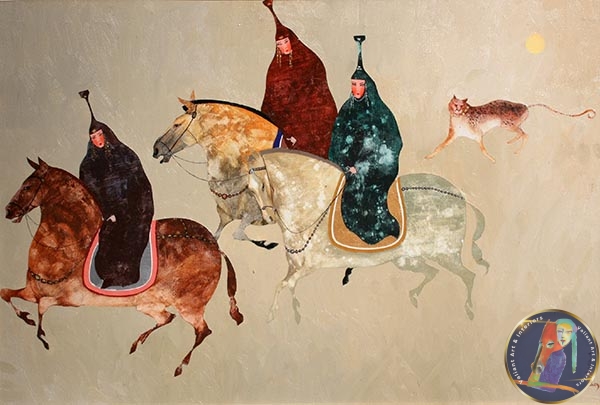
Horse Composition (2009) is a compelling modern interpretation of traditional Mongolian iconography, capturing the raw energy and spiritual essence of the nomadic landscape. Spanning a compact 40 x 60 cm canvas, the artwork balances contemporary abstraction with the deeply rooted cultural symbol of the horse, a creature central to Mongolian identity and heritage.

Color Palette and Texture

The canvas is dominated by an evocative, earthy palette that reflects the natural terrain of the Mongolian steppe, punctuated by modern stylistic choices:

  • Background and Atmosphere: The backdrop is rendered in rich, textured layers of deep ochre, burnt sienna, and muted sand tones. The paint application is tactile, with visible palette knife strokes and layered impasto that suggest the weathered, rugged expanse of the plains and the passage of time.

  • The Subject: The horse—or cluster of equine forms—is executed in a dynamic blend of deep charcoals, energetic blacks, and sharp accents of stark white or brilliant crimson. These bold color choices pull the focal point forward against the warm background.

Style and Composition

Enkhbold masterfully bridges the gap between traditional Mongol Zurag (traditional Mongolian painting style) and mid-20th-century Western abstraction.

  • Semi-Abstract Form: Rather than a strictly realist depiction, the horse is captured through a series of sweeping, gestural lines and geometric deconstructions. Linear anatomy dissolves into powerful, fluid shapes that mimic speed, wind, and movement. The mane and tail flow out into sharp, calligraphic brushstrokes, bridging traditional line work with contemporary expressionism.

  • Spatial Dynamics: The composition utilizes a compressed sense of space. The subject fills the canvas horizontally from left to right, creating a sense of forward momentum. There is a deliberate tension between the stillness of the heavily textured background and the explosive, kinetic energy of the horse.

Mood and Symbolism

The painting carries an atmosphere of spiritual reverence and wild freedom. By stripping away literal, pastoral details and focusing purely on the form and movement of the animal, Enkhbold elevates the horse from a simple beast of burden to a cosmic symbol of endurance and the nomadic soul. The piece feels simultaneously ancient and radically modern, encapsulating the duality of 21st-century Mongolian contemporary art.
  • Undram Enkhbold
  • Ulaanbaatar, Mongolia
  • Modern/Contemporary, Mongolian Style
  • Oil on canvas
  • UND/015
  • 40 x 60 cm15" x 23"
  • Valiant Art & Interiors

Add Your Comment

Mongolian Art Gallery © 2025. All Rights Reserved
Privacy Policy / Terms of Use

Horse Composition (2009) is a compelling modern interpretation of traditional Mongolian iconography, capturing the raw energy and spiritual essence of the nomadic landscape. Spanning a compact 40 x 60 cm canvas, the artwork balances contemporary abstraction with the deeply rooted cultural symbol of the horse, a creature central to Mongolian identity and heritage.

Color Palette and Texture

The canvas is dominated by an evocative, earthy palette that reflects the natural terrain of the Mongolian steppe, punctuated by modern stylistic choices:

  • Background and Atmosphere: The backdrop is rendered in rich, textured layers of deep ochre, burnt sienna, and muted sand tones. The paint application is tactile, with visible palette knife strokes and layered impasto that suggest the weathered, rugged expanse of the plains and the passage of time.

  • The Subject: The horse—or cluster of equine forms—is executed in a dynamic blend of deep charcoals, energetic blacks, and sharp accents of stark white or brilliant crimson. These bold color choices pull the focal point forward against the warm background.

Style and Composition

Enkhbold masterfully bridges the gap between traditional Mongol Zurag (traditional Mongolian painting style) and mid-20th-century Western abstraction.

  • Semi-Abstract Form: Rather than a strictly realist depiction, the horse is captured through a series of sweeping, gestural lines and geometric deconstructions. Linear anatomy dissolves into powerful, fluid shapes that mimic speed, wind, and movement. The mane and tail flow out into sharp, calligraphic brushstrokes, bridging traditional line work with contemporary expressionism.

  • Spatial Dynamics: The composition utilizes a compressed sense of space. The subject fills the canvas horizontally from left to right, creating a sense of forward momentum. There is a deliberate tension between the stillness of the heavily textured background and the explosive, kinetic energy of the horse.

Mood and Symbolism

The painting carries an atmosphere of spiritual reverence and wild freedom. By stripping away literal, pastoral details and focusing purely on the form and movement of the animal, Enkhbold elevates the horse from a simple beast of burden to a cosmic symbol of endurance and the nomadic soul. The piece feels simultaneously ancient and radically modern, encapsulating the duality of 21st-century Mongolian contemporary art.