
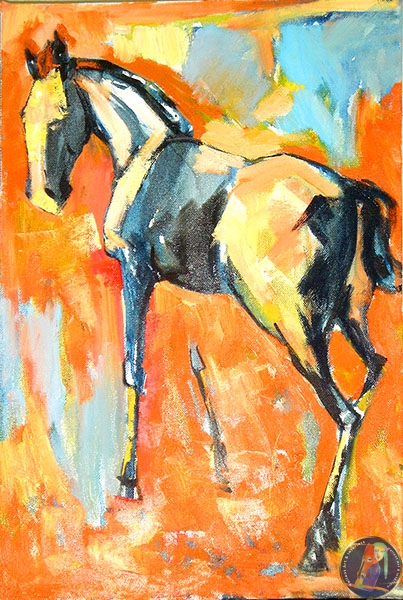
Horse

Sainkhuu Enkhbat , 2005 , Oil On Canvas

Rendered in oil on a vertical canvas measuring 51.5 by 33 centimeters, Horse by Mongolian contemporary artist Sainkhuu Enkhbat is a visceral exploration of form, movement, and cultural heritage. The painting steps away from rigid realism, opting instead for an expressive, semi-abstract style that prioritizes the raw, kinetic energy of its subject over anatomical precision.

Composition and Subject Matter

The composition is tightly focused, dominated entirely by the singular figure of a horse that seems to push against the boundaries of the relatively narrow frame. Enkhbat captures the animal in a moment of intense motion, utilizing a dynamic diagonal orientation. The horse’s powerful neck and head are positioned as the focal point, lunging forward and creating a palpable sense of momentum. The tight cropping forces the viewer into an intimate, almost confrontational proximity with the animal, emphasizing its strength and wild, untamed spirit—a nod to the deep-rooted equestrian traditions of the artist’s native Mongolia.

Color Palette and Light

The color palette is grounded in a rich, earthy spectrum that evokes the natural landscapes of the steppes, yet it is punctuated by striking, high-contrast tones. Deep, velvety shadows of umber, charcoal, and sienna define the musculature and contours of the horse’s form. These dark, grounding tones are brilliantly juxtaposed with sharp highlights of cream, stark white, and flashes of warm ochre or gold, which catch the crest of the neck, the curve of the flank, and the flowing textures of the mane. The light source appears directional and intense, cutting across the form to create dramatic chiaroscuro effects that heighten the painting’s emotional weight and physical dimension.

Texture and Brushwork

Enkhbat’s handling of the oil medium is highly tactile and visible. The paint is applied with confident, gestural brushstrokes and deliberate palette knife work, resulting in a heavily textured surface (impasto) in key areas.

  • The Mane: Rendered with long, sweeping, and aggressive strokes that convey wind and speed.

  • The Body: Built up with layered, multi-directional patches of color that mimic the shifting of muscle and bone under tension.

  • The Background: Kept deliberately atmospheric and ambiguous. It features scumbled, muted tones of gray, beige, and faint earth colors, blending seamlessly with the edges of the horse. This technique ensures the background never competes with the central subject, acting instead as a turbulent space out of which the horse powerfully emerges.

Mood and Presence

Overall, Horse is a powerful testament to Enkhbat’s ability to merge contemporary expressive techniques with traditional nomadic iconography. The painting does not merely depict an animal; it embodies the concept of vitality, speed, and endurance. Its exhibition history at both the Carrousel Du Louvre and the International Equestrian Festival highlights its universal appeal, bridging fine art experimentation with a profound celebration of the equine form.

  • Sainkhuu Enkhbat
  • Ulaanbaatar, Mongolia
  • Abstract, Figurative, Minimalist, Modern/Contemporary, Nude
  • Oil on canvas
  • SAI56/006
  • 51.5 x 33cm20" x 12"
  • Valiant Art & Interiors

Add Your Comment

Mongolian Art Gallery © 2025. All Rights Reserved
Privacy Policy / Terms of Use

Rendered in oil on a vertical canvas measuring 51.5 by 33 centimeters, Horse by Mongolian contemporary artist Sainkhuu Enkhbat is a visceral exploration of form, movement, and cultural heritage. The painting steps away from rigid realism, opting instead for an expressive, semi-abstract style that prioritizes the raw, kinetic energy of its subject over anatomical precision.

Composition and Subject Matter

The composition is tightly focused, dominated entirely by the singular figure of a horse that seems to push against the boundaries of the relatively narrow frame. Enkhbat captures the animal in a moment of intense motion, utilizing a dynamic diagonal orientation. The horse’s powerful neck and head are positioned as the focal point, lunging forward and creating a palpable sense of momentum. The tight cropping forces the viewer into an intimate, almost confrontational proximity with the animal, emphasizing its strength and wild, untamed spirit—a nod to the deep-rooted equestrian traditions of the artist’s native Mongolia.

Color Palette and Light

The color palette is grounded in a rich, earthy spectrum that evokes the natural landscapes of the steppes, yet it is punctuated by striking, high-contrast tones. Deep, velvety shadows of umber, charcoal, and sienna define the musculature and contours of the horse’s form. These dark, grounding tones are brilliantly juxtaposed with sharp highlights of cream, stark white, and flashes of warm ochre or gold, which catch the crest of the neck, the curve of the flank, and the flowing textures of the mane. The light source appears directional and intense, cutting across the form to create dramatic chiaroscuro effects that heighten the painting’s emotional weight and physical dimension.

Texture and Brushwork

Enkhbat’s handling of the oil medium is highly tactile and visible. The paint is applied with confident, gestural brushstrokes and deliberate palette knife work, resulting in a heavily textured surface (impasto) in key areas.

  • The Mane: Rendered with long, sweeping, and aggressive strokes that convey wind and speed.

  • The Body: Built up with layered, multi-directional patches of color that mimic the shifting of muscle and bone under tension.

  • The Background: Kept deliberately atmospheric and ambiguous. It features scumbled, muted tones of gray, beige, and faint earth colors, blending seamlessly with the edges of the horse. This technique ensures the background never competes with the central subject, acting instead as a turbulent space out of which the horse powerfully emerges.

Mood and Presence

Overall, Horse is a powerful testament to Enkhbat’s ability to merge contemporary expressive techniques with traditional nomadic iconography. The painting does not merely depict an animal; it embodies the concept of vitality, speed, and endurance. Its exhibition history at both the Carrousel Du Louvre and the International Equestrian Festival highlights its universal appeal, bridging fine art experimentation with a profound celebration of the equine form.