Goo

Tuya Natsagdorj , 2006 , Oil On Canvas

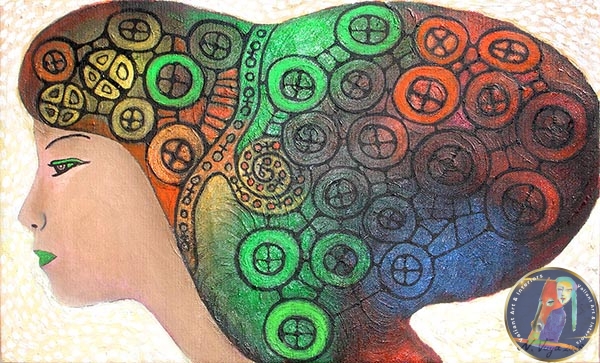
Goo is a mid-sized, horizontally oriented oil painting measuring 30 by 50 centimeters. The piece is a striking example of contemporary Mongolian figurative modernism, blending Western post-impressionist or early modernist form with traditional Central Asian symbolist sensibilities. True to the painting’s title—which translates directly to “Beauty” or “Grace” in Mongolian—the central focus of the composition is a stylized, minimalist depiction of the female form. The human figure is framed using a close up, intimate layout that highlights elegant, fluid linework and a deliberate economy of detail.

Color Palette and Atmosphere

The color field is dominated by deep, atmospheric tones, shifting seamlessly between cool blues, rich indigos, and subtle grounding neutrals. Rather than pursuing strict realism, Natsagdorj utilizes a deeply expressive, slightly monochromatic approach to color. The application of the oil paint features layered, smooth brushwork that gives the surface a soft, luminous texture. Light is handled abstractly, seeming to emanate from within the subject rather than a distinct, physical light source, establishing a calm, meditative, and intensely spiritual atmosphere.

Subject Matter & Stylistic Interpretation

The subject is rendered with soft contours and an elongated silhouette, an aesthetic choice that reflects the artist’s unique educational background—synthesizing structural scene-painting techniques from Ukraine, refined graphic sensibilities from Japan, and her roots in Ulaanbaatar.

The facial features and anatomy of the figure are deeply understated, leaning toward abstraction. There is a strong emphasis on continuous, flowing lines that trace the slope of the shoulders, neck, and head, emphasizing poise and internal reflection. Background elements are entirely simplified into shifting fields of deep color, pulling all focus onto the central subject. This visual isolation highlights a solitary, sacred sense of femininity, exploring the concept of beauty not merely as an external physical trait, but as an interior state of balance, resilience, and quiet dignity rooted in Mongolian heritage.
  • Tuya Natsagdorj
  • Ulaanbaatar, Mongolia
  • Abstract, Expressionist, Figurative, Modern/Contemporary, Still Life
  • Oil on canvas
  • TUY49/018
  • 30 x 50cm12" x 19"
  • Valiant Art & Interiors

Add Your Comment

Mongolian Art Gallery © 2025. All Rights Reserved
Privacy Policy / Terms of Use

Goo is a mid-sized, horizontally oriented oil painting measuring 30 by 50 centimeters. The piece is a striking example of contemporary Mongolian figurative modernism, blending Western post-impressionist or early modernist form with traditional Central Asian symbolist sensibilities. True to the painting’s title—which translates directly to “Beauty” or “Grace” in Mongolian—the central focus of the composition is a stylized, minimalist depiction of the female form. The human figure is framed using a close up, intimate layout that highlights elegant, fluid linework and a deliberate economy of detail.

Color Palette and Atmosphere

The color field is dominated by deep, atmospheric tones, shifting seamlessly between cool blues, rich indigos, and subtle grounding neutrals. Rather than pursuing strict realism, Natsagdorj utilizes a deeply expressive, slightly monochromatic approach to color. The application of the oil paint features layered, smooth brushwork that gives the surface a soft, luminous texture. Light is handled abstractly, seeming to emanate from within the subject rather than a distinct, physical light source, establishing a calm, meditative, and intensely spiritual atmosphere.

Subject Matter & Stylistic Interpretation

The subject is rendered with soft contours and an elongated silhouette, an aesthetic choice that reflects the artist’s unique educational background—synthesizing structural scene-painting techniques from Ukraine, refined graphic sensibilities from Japan, and her roots in Ulaanbaatar.

The facial features and anatomy of the figure are deeply understated, leaning toward abstraction. There is a strong emphasis on continuous, flowing lines that trace the slope of the shoulders, neck, and head, emphasizing poise and internal reflection. Background elements are entirely simplified into shifting fields of deep color, pulling all focus onto the central subject. This visual isolation highlights a solitary, sacred sense of femininity, exploring the concept of beauty not merely as an external physical trait, but as an interior state of balance, resilience, and quiet dignity rooted in Mongolian heritage.