
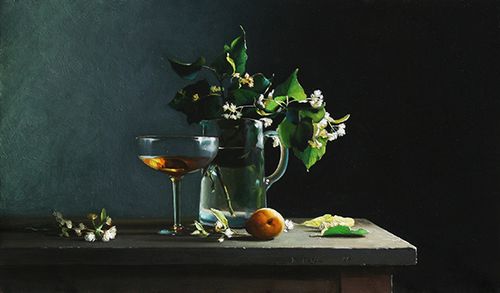
This 2008 oil on canvas masterpiece, measuring 35 x 55 cm, is a quintessential example of the late Mongolian artist Batjargal Tseintsogzol’s mastery of Photorealism and Nature. Known for his ability to capture the soul of the Mongolian landscape, Tseintsogzol shifts his focus here to an intimate botanical study that feels both scientific in its precision and deeply poetic in its execution.
Visual Analysis
Composition & Detail: The painting features a meticulously arranged cluster of wildflowers. Rather than a traditional “vase and table” setup, the composition feels organic—as if the viewer has stumbled upon these blooms in their natural habitat or a freshly gathered bundle. Every petal is rendered with anatomical accuracy, showcasing the artist’s dedication to Realism.
Color Palette: Tseintsogzol utilizes a sophisticated palette of soft pastels contrasted against vibrant, saturated greens. The interplay of light suggests a specific time of day—likely the “golden hour”—where the sun hits the edges of the petals, making them appear translucent and delicate.
Texture and Technique: The “Photorealistic” label is earned through the artist’s handling of oil paint. He achieves a smooth, almost brushless finish that mimics the depth of field found in macro photography. You can almost feel the velvet texture of the leaves and the brittle dryness of the stems.
Artistic Context
Batjargal Tseintsogzol was a prominent figure in the Mongolian contemporary art scene. Born in Ulaanbaatar, his work often bridged the gap between traditional nomadic appreciation for nature and modern technical brilliance.
“His work doesn’t just show you a flower; it demands you notice the life-force within it.”
In Flower Composition 1, there is a quiet stillness characteristic of his 2008 period. While many artists of his generation were moving toward abstraction, Tseintsogzol doubled down on the “truth” of the natural world, using his brush to document the fleeting beauty of Mongolian flora before his passing in 2020.