
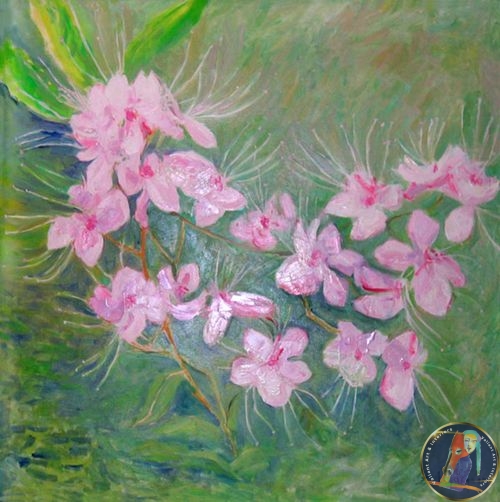
Enkhrii 3

Uyanga Zorig , 2005 , Oil On Canvas

Enkhrii 3 is a captivating oil on canvas work that measures a balanced 100 x 100 cm. Created by the esteemed Mongolian artist Uyanga Zorig, the piece is a masterclass in blending the rigorous technical training of the Repin Academy with the soulful, nomadic heritage of Mongolia.

The title, Enkhrii—which translates from Mongolian as “dear,” “tender,” or “beloved”—sets the emotional tone for a composition that radiates warmth and intimacy.

Composition and Subject Matter

The painting is a rich, figurative still life that centers on the themes of maternal love and cultural preservation. At its heart, the composition features a stylized depiction of a mother and child, rendered with a tenderness that suggests a deep, ancestral bond.

  • The Figures: Zorig utilizes a soft, almost ethereal approach to the figures, blurring the lines between realism and symbolic representation. The “tender” embrace is the focal point, around which the rest of the canvas orbits.

  • Symbolism: True to her background in Calligraphy and Graphic Art, Zorig integrates subtle, flowing linework that mimics traditional Mongolian script. These elements weave through the background, suggesting that the love depicted is part of a much larger, historical narrative.

Color Palette and Texture

The year 2005 marked a period where Zorig’s work often explored earthy, grounded tones contrasted with vibrant, spiritual highlights.

  • Primary Hues: The canvas is dominated by deep ochres, burnt sienna, and warm terracottas, reminiscent of the Mongolian steppe and traditional felt interiors.

  • Accents: These heavy, earthy tones are pierced by strokes of turquoise, gold leaf effects, or brilliant crimson, adding a sense of “jeweled” preciousness to the subject.

  • Brushwork: Reflecting her Realist training in Saint Petersburg, the textures are sophisticated. Zorig employs thin, layered glazes to create depth in the skin tones, while using thicker, more expressive impasto to define the textures of traditional Mongolian textiles and ornaments.

  • Uyanga Zorig
  • Realism, Sculpture
  • Oil On Canvas
  • UYG51/005
  • 100 x 100cm
  • Mongolian Art Gallery

Add Your Comment

Mongolian Art Gallery © 2025. All Rights Reserved
Privacy Policy / Terms of Use

Enkhrii 3 is a captivating oil on canvas work that measures a balanced 100 x 100 cm. Created by the esteemed Mongolian artist Uyanga Zorig, the piece is a masterclass in blending the rigorous technical training of the Repin Academy with the soulful, nomadic heritage of Mongolia.

The title, Enkhrii—which translates from Mongolian as “dear,” “tender,” or “beloved”—sets the emotional tone for a composition that radiates warmth and intimacy.

Composition and Subject Matter

The painting is a rich, figurative still life that centers on the themes of maternal love and cultural preservation. At its heart, the composition features a stylized depiction of a mother and child, rendered with a tenderness that suggests a deep, ancestral bond.

  • The Figures: Zorig utilizes a soft, almost ethereal approach to the figures, blurring the lines between realism and symbolic representation. The “tender” embrace is the focal point, around which the rest of the canvas orbits.

  • Symbolism: True to her background in Calligraphy and Graphic Art, Zorig integrates subtle, flowing linework that mimics traditional Mongolian script. These elements weave through the background, suggesting that the love depicted is part of a much larger, historical narrative.

Color Palette and Texture

The year 2005 marked a period where Zorig’s work often explored earthy, grounded tones contrasted with vibrant, spiritual highlights.

  • Primary Hues: The canvas is dominated by deep ochres, burnt sienna, and warm terracottas, reminiscent of the Mongolian steppe and traditional felt interiors.

  • Accents: These heavy, earthy tones are pierced by strokes of turquoise, gold leaf effects, or brilliant crimson, adding a sense of “jeweled” preciousness to the subject.

  • Brushwork: Reflecting her Realist training in Saint Petersburg, the textures are sophisticated. Zorig employs thin, layered glazes to create depth in the skin tones, while using thicker, more expressive impasto to define the textures of traditional Mongolian textiles and ornaments.