
Biographical Background: Born in 1970 in Ulaanbaatar, Mongolia. Natsagdorj’s artistic evolution is rooted in diverse international training, graduating from the Fine Art College in Ulaanbaatar (1986–1990) before training in scene painting in Kyiv, Ukraine (1990–1991), and pursuing further specialized studies at the Kyoto University of the Arts in Japan (2002–2003). Operating as a freelance artist since 1991, Natsagdorj’s works blend European modernism with distinct East Asian compositional clarity and symbolic, ornamental motifs.
Technical Specifications
Title: Egshiglen (A Mongolian name translating roughly to “Melody” or “Harmony”)
Medium: Oil on canvas
Dimensions: $74 \times 73.5 \text{ cm}$
Accession Number: TUY49/008
Detailed Description of the Painting
1. Composition and Subject Matter
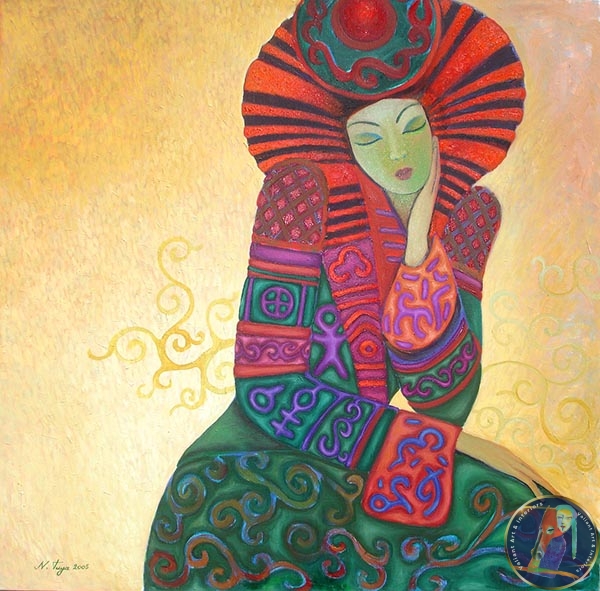
Egshiglen is a contemporary, figurative composition that bridges traditional Mongolian identity with a modern global aesthetic. The painting centers around a stylized, symbolic portrayal of a female figure, a hallmark of Natsagdorj’s signature thematic focus. True to its title, which evokes musicality and internal resonance, the canvas captures a sense of quietude and rhythmic grace. The subject is integrated into a balanced, nearly square composition, emphasizing symmetry and structural harmony that reflects the artist’s formal background in Japanese design and Ukrainian scene painting.
2. Palette and Color Theory
The color profile is characterized by a sophisticated, cool-toned palette with an emphasis on expressive blues, deep indigos, and muted teals. These oceanic and celestial hues are layered to establish an ethereal, spiritual atmosphere. Contrast is introduced through delicate, warm undertones—soft golds, ochres, or pale skin tones—that highlight the contours of the central figure. The interaction of deep blues against these subtle highlights gives the painting a luminous, glowing quality, shifting between a dreamlike nighttime ambiance and a sacred space.
3. Stylistic Influences and Texture
Ornamental Symbolism: The painting employs a delicate synthesis of modernist figuration and traditional Mongolian ornamentation. Elements of clothing, background textures, or hair patterns feature subtle geometric and organic motifs reminiscent of nomadic heritage and Buddhist art traditions.
Brushwork: The application of the oil paint alternates between smooth, fluid color transitions that form the subject’s silhouette and more textured, layered impasto elements in the surrounding negative space. This dual approach gives the flat surface of the canvas an unexpected depth.
The Narrative Tone: Ultimately, Egshiglen functions as a visual representation of a melody. Rather than portraying an active musical performance, the composition captures the feeling of a song—graceful lines, evocative coloration, and a deeply meditative mood that reflects a modern, independent female perspective inside Mongolian contemporary art.