

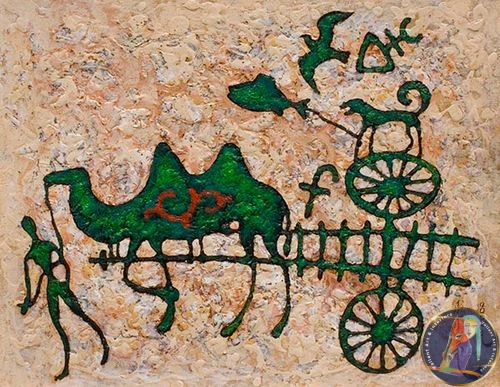
Decoration 8 is a compelling synthesis of Tsegmid Tserennadmid’s mastery over contemporary abstraction and his roots in the Mongolian landscape. Despite its modest dimensions, the painting carries an expansive energy, utilizing a rich, textured application of oil paint that suggests both physical depth and emotional intensity.
Composition and Form: The work leans heavily into the Expressionist style. Rather than a literal depiction of a scene, the composition is built through a series of rhythmic, gestural brushstrokes. There is a sense of “organized chaos” where organic shapes intersect with structured, decorative motifs—likely a nod to traditional Mongolian patterns reimagined through a modern lens.
Color Palette: Tserennadmid often employs a palette that mirrors the earthy yet vibrant tones of the Mongolian steppe. In Decoration 8, expect a sophisticated interplay of deep ochres, terracottas, and perhaps flashes of lapis lazuli or emerald. The colors are layered, allowing previous strokes to peek through, creating a “shimmering” effect that justifies the title’s reference to decoration.
Texture: The surface is tactile and active. The artist’s background as a teacher and director of fine arts is evident in the technical precision of the impasto. The paint isn’t just applied; it is sculpted, creating a topographical map of the artist’s internal vision.
Context and Artist Background
To understand Decoration 8, one must look at the pedigree of its creator, Tsegmid Tserennadmid. Born in 1958 in Ulaanbaatar, Tserennadmid is a foundational figure in the Mongolian modern art movement.
Academic Influence: His roles as the Director of the Art College and later the President of the University of Art & Culture in Ulaanbaatar signify that his work is not merely experimental but grounded in a deep understanding of art history and theory.
Global Reach: Created just a year after his major international showcases in Montreal, Las Vegas, and London (2007), this painting represents the artist at the height of his creative confidence. It captures the essence of a “Mongolian Kingdom”—not through horses or yurts, but through the spirit of the land translated into an abstract, universal language.
