Cutter Woman

Munkhtsetseg Jalkhaajav , 2006 , Oil On Canvas

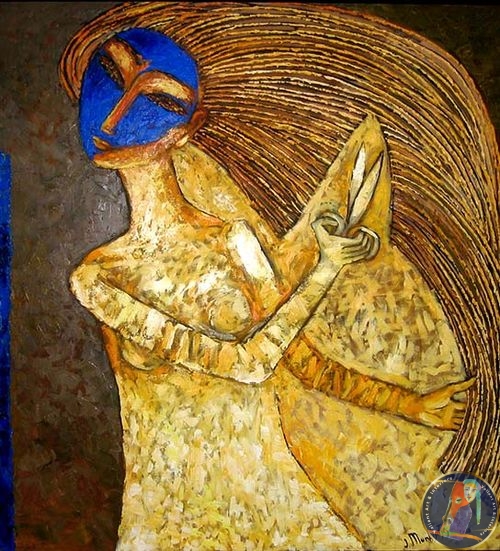
In Cutter Woman, Munkhtsetseg Jalkhaajav presents a haunting and deeply symbolic exploration of the female form, rendered in her signature blend of Contemporary Figurative and Abstract Modern styles. The painting features a central female figure whose presence is both ethereal and visceral. The composition is tight, focusing on the torso and limbs, which are stylized with elongated, fluid lines that reflect the artist’s training in Minsk and her roots in Mongolian aesthetic traditions.

The palette is dominated by muted, earthy tones—ochres, deep reds, and bruised purples—interspersed with stark, cold highlights. This color choice evokes a sense of internal landscape, suggesting that the “cutting” referenced in the title is as much psychological or spiritual as it is physical.

Symbolism and Theme

The work delves into the concept of healing and fragmentation. In Jalkhaajav’s iconography, “cutting” often refers to the traditional Mongolian medicinal practices and the shamanic belief in the body as a vessel that can be disassembled and reconstructed.

  • The Act of Cutting: The figure is depicted with sharp, scissor-like implements or anatomical incisions that do not signify violence, but rather a surgical precision. It represents the shedding of pain, the removal of “bad blood,” or the transformation of the self.

  • The Body as Landscape: The 90 x 100 cm canvas allows for a monumental feeling despite its medium size. The woman’s body appears almost translucent in sections, blurred by abstract strokes that suggest she is in a state of flux or metamorphosis.

  • The Feminine Experience: As a leading voice among Mongolian women artists, Jalkhaajav uses the “Cutter Woman” to symbolize the resilience and silent endurance of women. The figure’s face is often obscured or rendered with a stoic, mask-like quality, shifting the focus to the communicative power of the body’s posture.
  • Munkhtsetseg Jalkhaajav
  • Calligraphy, Geometric
  • Oil On Canvas
  • MUK37/003
  • 90 x 100cm
  • Mongolian Art Gallery

Add Your Comment

Mongolian Art Gallery © 2025. All Rights Reserved
Privacy Policy / Terms of Use

In Cutter Woman, Munkhtsetseg Jalkhaajav presents a haunting and deeply symbolic exploration of the female form, rendered in her signature blend of Contemporary Figurative and Abstract Modern styles. The painting features a central female figure whose presence is both ethereal and visceral. The composition is tight, focusing on the torso and limbs, which are stylized with elongated, fluid lines that reflect the artist’s training in Minsk and her roots in Mongolian aesthetic traditions.

The palette is dominated by muted, earthy tones—ochres, deep reds, and bruised purples—interspersed with stark, cold highlights. This color choice evokes a sense of internal landscape, suggesting that the “cutting” referenced in the title is as much psychological or spiritual as it is physical.

Symbolism and Theme

The work delves into the concept of healing and fragmentation. In Jalkhaajav’s iconography, “cutting” often refers to the traditional Mongolian medicinal practices and the shamanic belief in the body as a vessel that can be disassembled and reconstructed.

  • The Act of Cutting: The figure is depicted with sharp, scissor-like implements or anatomical incisions that do not signify violence, but rather a surgical precision. It represents the shedding of pain, the removal of “bad blood,” or the transformation of the self.

  • The Body as Landscape: The 90 x 100 cm canvas allows for a monumental feeling despite its medium size. The woman’s body appears almost translucent in sections, blurred by abstract strokes that suggest she is in a state of flux or metamorphosis.

  • The Feminine Experience: As a leading voice among Mongolian women artists, Jalkhaajav uses the “Cutter Woman” to symbolize the resilience and silent endurance of women. The figure’s face is often obscured or rendered with a stoic, mask-like quality, shifting the focus to the communicative power of the body’s posture.