
Detailed Visual and Aesthetic Description
1. Style and Genre
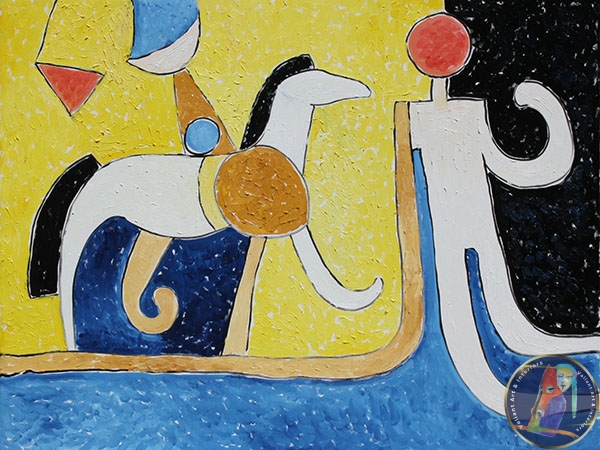
Composition is a semirealistic to abstract-leaning contemporary oil painting that heavily utilizes semi-abstract expressionism and stylized figuration. True to Banzardari’s signature artistic voice, the piece bridges traditional nomadic Mongolian themes—such as the profound, spiritual relationship between humans, horses, and the vast steppe—with modern, avant-garde European painting techniques.
2. Subject Matter and Imagery
The painting captures a fluid, dreamlike scene rooted in equestrian and nomadic culture. Rather than a stark, photorealistic depiction, the forms of horses and figures emerge organically from the background.
The Figures: Deconstructed or heavily stylized forms of horses and human riders dominate the canvas. The contours are dynamic, suggesting powerful movement, galloping, or the wind whipping across the Mongolian plains.
The Compositional Structure: As the title implies, the layout is an intentional puzzle of shapes and lines. The forms overlap, with the anatomy of the horses blending seamlessly into the negative space, creating an interconnected web of energy rather than isolated subjects.
3. Color Palette
The color scheme is deeply evocative of the natural Mongolian landscape, mixed with emotive abstract tones:
Dominant Earth Tones: Rich ochres, deep burnt siennas, muted browns, and sandy beiges evoke the soil, leather, and sun-baked expanses of the steppe.
Atmospheric Cool Tones: Interspersions of slate grays, muted blues, or stark whites are woven throughout the canvas, mirroring the unpredictable sky and the spiritual concept of the Tenger (the eternal blue sky).
Contrasting Accents: Strategic pops of deep crimson or subtle gold highlights are used to direct the eye across the canvas and accentuate the kinetic energy of the scene.
4. Texture and Brushwork
Textured Impasto: Banzardari employs a highly tactile approach to the canvas. The oil paint is applied unevenly, with visible palette knife strokes and thick impasto texture alternating with thinner, blended washes.
Dynamic Line Work: Sharp, incised lines scratch through layers of wet paint to create definition, simulating the texture of horse hair, dust clouds, or traditional Mongolian patterns. The brushwork feels urgent and deliberate, emphasizing speed, vitality, and the raw essence of the wind.
5. Mood and Atmosphere
The painting carries an air of rustic majesty and timeless myth. It feels simultaneously ancient and thoroughly modern. By dissolving rigid boundaries between the rider, the steed, and the horizon, the artwork successfully communicates a spiritual harmony and the boundless freedom inherent to the nomadic spirit.